



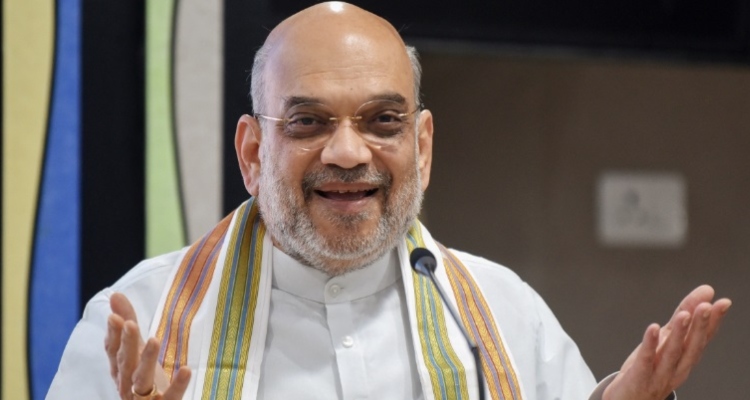
Union Minister Amit Shah has recently emphasized the crucial role lawyers have played in nation-building, securing India’s independence, and framing the Constitution.
Addressing a gathering of 11,000 young lawyers at the Bar Association of Gujarat’s oath-taking ceremony, he asserted that the legal profession is more than just a career— it is a sacred duty.
Lawyers: Guardians Of The Constitution & Justice
Shah highlighted that lawyers are professionally engaged in protecting the Constitution and ensuring justice for citizens.
“The profession you are joining today is not just a profession but a sacred duty—to strengthen the Constitution and democracy and implement constitutional rights to protect the property, body, and honour of 140 crore citizens,” he stated.
He also pointed out that legal experts have helped shape the country’s laws through landmark Supreme Court judgments, ensuring the preservation of the Constitution’s original spirit. Many great freedom fighters and those instrumental in drafting the Constitution were distinguished lawyers, he added.
New Era For Legal Profession
Shah reminded the young lawyers that they are joining the profession at a transformative time— when India’s Constitution has completed 75 years, the Parliament has introduced sweeping reforms in criminal laws, and the nation has become the world’s fifth-largest economy.
He stressed their role in upholding and implementing the visionary, transparent, and inclusive Constitution created by India’s founding fathers.
Legal Reforms & Nation-Building Initiatives
Shah credited Prime Minister Narendra Modi for ensuring social, economic, and political justice through landmark decisions, such as:
Social Justice: Abolishing triple talaq to provide equal rights to Muslim women.
Educational Reforms: Introducing a new education policy focusing on skill-based learning in regional languages.
Economic Reforms: Simplifying 39,000 laws, merging banks, resolving NPA issues, and strengthening the Indian economy.
Political Justice: Revoking Article 370 and securing 12 peace agreements in the Northeast.
Women’s Empowerment: Providing 33% reservation for women in law-making bodies through the Nari Shakti Vandana Act.
Ensuring Speedy Justice Through Legal Reforms
Shah acknowledged the judiciary’s strong public trust but warned that delayed justice could weaken confidence over time.
“If it takes 20 years to get justice, then this trust cannot last for long,” he said.
To address this, three new criminal laws have been introduced to ensure quicker trials. These laws include rationalized procedures, set time limits, and provisions for summary trials to expedite small and large cases alike.
By implementing these reforms, Shah expressed confidence that India’s judicial system will continue to uphold justice efficiently and fairly.
Read More: Supreme Court, Delhi High Court, States High Court, International