



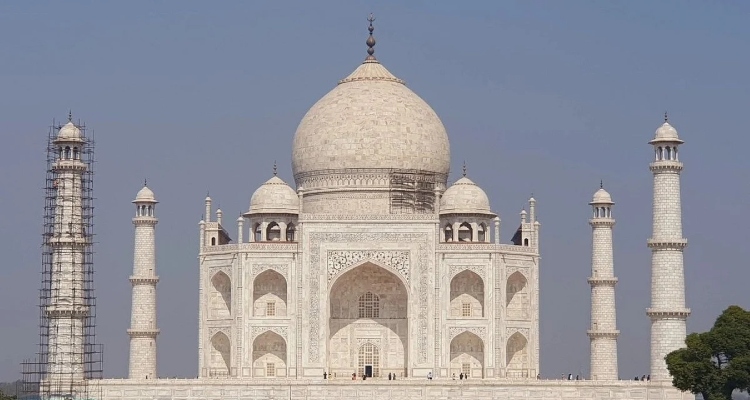
The Supreme Court on Tuesday directed the National Environmental Engineering Research Institute (NEERI) to conduct an environmental impact study of glass factories operating near the Taj Mahal in Uttar Pradesh.
A bench of Justices Abhay S Oka and Ujjal Bhuyan asked NEERI to submit an affidavit detailing the timeline for completion of the assessment. The court made it clear that if the units are found to be polluting, it may not hesitate to order their relocation.
“We want to know the extent of pollution caused by these industries,” the bench said, calling for coordinated action from all government agencies, including the Uttar Pradesh Pollution Control Board (UPPCB).
The UPPCB was also instructed to form a team to inspect the industries named in the state’s affidavit. The court directed that an interim report be filed after examining five such units, enabling further directions based on findings.
Court Slams Lax Oversight In TTZ
The bench also pulled up the Taj Trapezium Zone (TTZ) Authority, criticizing its failure to enforce environmental safeguards. The court had earlier questioned whether the effort to preserve the Taj had turned into a “tamasha” (farce) or a joke.
The TTZ, spread across over 10,400 square kilometers, includes key districts such as Agra, Firozabad, Mathura, Hathras, Etah, and parts of Rajasthan’s Bharatpur. The region is meant to be an eco-sensitive zone aimed at protecting the 17th-century Mughal monument from industrial emissions and air pollution.
The court has been actively overseeing conservation efforts around the Taj Mahal, a UNESCO World Heritage Site, which continues to face threats from rapid industrial activity in the area.
The matter will be reviewed again after NEERI and the UPPCB file their respective reports.
Read More: Supreme Court, Delhi High Court, States High Court, International