



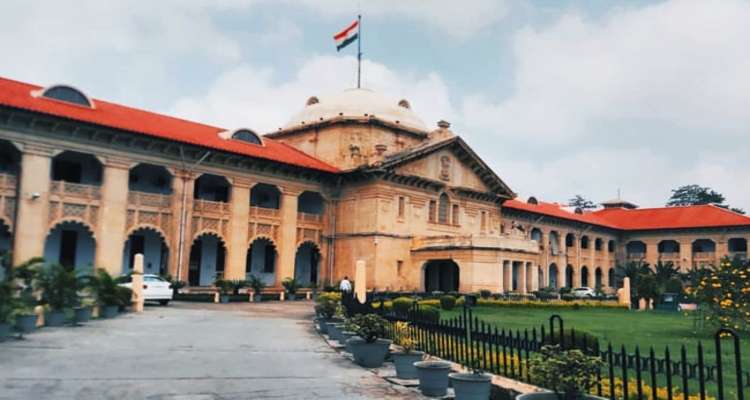
The Allahabad High Court has made it clear that an accused out on bail cannot automatically seek permission to travel abroad for non-essential reasons such as weddings or leisure trips.
In a recent judgment, the Lucknow bench emphasized that such requests must be based on urgent and compelling grounds.
Court Denies Request For Wedding & Leisure Travel
Justice Subhash Vidyarthi delivered the verdict while rejecting a plea by Aditya Murti, a consultant with Shri Ram Murti Smarak Institute of Medical Sciences in Bareilly. Murti had approached the High Court after a special CBI court declined his request to travel overseas.
He had planned to attend a relative’s wedding in the United States and then continue on to France for related celebrations, scheduled from May 3 to May 22.
The court firmly stated, “An accused person who has been enlarged on bail can be granted permission to travel abroad for some pressing necessity like medical treatment, attending essential official duties and the like.”
However, it ruled that a wedding abroad and a subsequent leisure trip do not qualify as such.
Previous Permissions Don’t Create A Right
Murti argued that he had been granted similar permissions for foreign travel on multiple occasions in the past. The court acknowledged this but dismissed the notion that it sets a precedent for future requests.
“Merely because the trial court had earlier granted permission to the applicant to travel abroad for non-essential objects on numerous occasions, he does not get a right to travel abroad for non-essential objects this time also, when the trial has reached the stage of defence evidence,” the bench noted.
Trial Has Reached A Crucial Stage
Murti has been facing trial in a CBI case for over ten years. The Supreme Court has already directed the trial court to expedite the proceedings. With the case now at the stage of defence evidence, the High Court viewed any foreign travel as potentially disruptive.
The judgment reinforces the principle that while bail allows conditional liberty, it does not provide an accused with unrestricted freedom to travel internationally. Courts remain cautious, especially when the accused is facing a serious trial and the case is at an advanced stage.
Conclusion
The ruling serves as a reminder that foreign travel for undertrial individuals will only be permitted under exceptional circumstances. Social events, however important they may be personally, are not compelling enough reasons to override judicial prudence.
Read More: Supreme Court, Delhi High Court, States High Court, International