



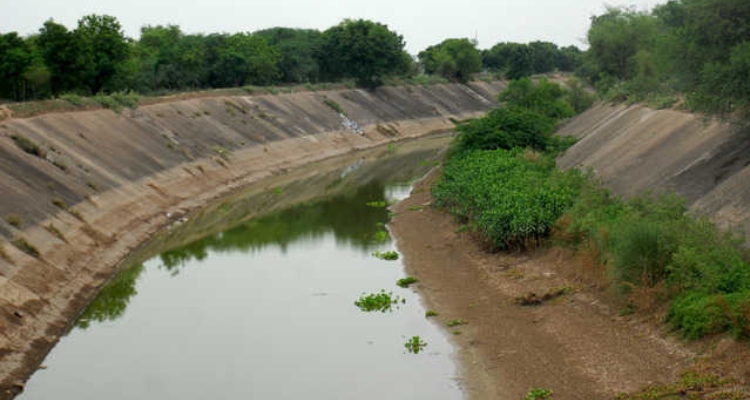
The Supreme Court on Tuesday directed the governments of Punjab and Haryana to work collaboratively with the Centre to find an amicable resolution to the long-standing Sutlej-Yamuna Link (SYL) canal dispute.
A bench comprising Justices B.R. Gavai and Augustine George Masih was informed by the Centre that meaningful steps have already been taken to mediate the conflict.
The bench stated, “We direct both the states to cooperate with the Union of India in arriving at an amicable solution.”
The court scheduled the next hearing for August 13, noting that it would only intervene again if the matter remains unresolved by then.
Centre Seeks States’ Commitment
Appearing on behalf of the Centre, Additional Solicitor General Aishwarya Bhati emphasized the need for both states to actively participate in the resolution process.
“We have made efforts for mediation, but the states have to walk the talk,” she told the bench, highlighting that dialogue alone won’t help unless backed by genuine commitment from Punjab and Haryana.
Background Of The Dispute
The Sutlej-Yamuna Link canal was envisioned to facilitate the equitable distribution of water from the Ravi and Beas rivers between Punjab and Haryana. As per the original plan, the canal was to span 214 kilometers—122 km falling in Punjab and 92 km in Haryana.
While Haryana has completed construction of its portion of the canal, Punjab abandoned the project after beginning construction in 1982. The dispute has persisted for decades, becoming a major political and legal flashpoint between the two states.
In a significant judgment dated January 15, 2002, the Supreme Court ruled in favour of Haryana in a suit filed in 1996. The Court directed the Punjab government to complete construction of its share of the canal. However, the directive has remained largely unimplemented, fueling further contention.
A Decades-Old Impasse
Despite several attempts at negotiation and legal intervention, the SYL canal issue remains unresolved. The Centre has been acting as a mediator in recent years, but progress has been slow. The Supreme Court’s latest directive underlines the urgency of finding a mutually acceptable solution through cooperative federalism.
As the August 13 deadline approaches, all eyes will be on Punjab and Haryana to see whether the decades-old water-sharing dispute can finally move towards closure.
Read More: Supreme Court, Delhi High Court, States High Court, International