


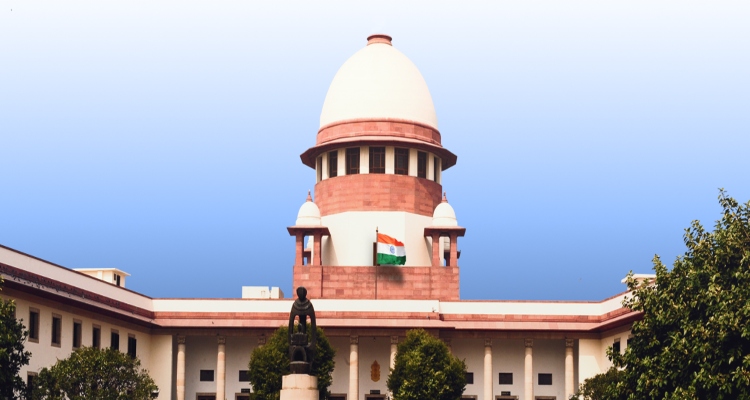
The Supreme Court of India on Tuesday affirmed a decision by the now-defunct Competition Appellate Tribunal (COMPAT), ruling that volume-based discounts do not amount to discriminatory pricing under the Competition Act, 2002, unless such pricing is unequally applied to equivalent transactions.
Court Observation
A Bench comprising Justices Vikram Nath and Prasanna B Varale observed: “The order of the COMPAT is affirmed. A cost of ₹5 lakh is imposed on Kapoor Glass for prolonged litigation.”
The judgment concludes an appeal pending since 2014, marking the end of a protracted legal battle initiated by Kapoor Glass, a manufacturer of glass ampoules and vials. The company had filed a complaint against Schott Glass India, a dominant supplier of neutral borosilicate glass tubes, alleging discriminatory pricing practices and preferential treatment toward its joint venture partner.
Case Background
In 2012, the Competition Commission of India (CCI) found Schott Glass guilty of abuse of dominant position under Section 4 of the Competition Act, citing unfair pricing and denial of market access. The CCI imposed a fine of ₹5.66 crore and issued a cease-and-desist order.
However, in 2014, the COMPAT reversed the CCI’s ruling, holding that volume-based discounts are not anti-competitive unless they result in differential treatment of similarly situated buyers. It reasoned that a buyer purchasing significantly larger volumes could be offered better terms without it constituting unfair trade practice.
“To establish discrimination, there must be differential treatment for equivalent transactions. If a large buyer receives better terms owing to higher volumes, and no other buyer places comparable orders, it does not violate competition law.”
It further acknowledged that Schott’s joint venture partner accounted for over 30% of its total output, justifying the differential treatment as commercially reasonable.
The Tribunal also addressed Kapoor Glass’s allegations regarding refusal to supply, stating that the refusal was valid due to the company’s previous involvement in misusing Schott’s branding, including allegations of counterfeit trademark use.
Legal Representation
CCI was represented by Senior Advocate Amit Sibal along with a team of advocates including Arjun Krishnan, Anand S Pathak, Shashank Gautam, and others.
Schott Glass was represented by Senior Advocate Percival Billimoria, assisted by Mahesh Agarwal, Rahul Goel, and legal team.
Kapoor Glass was represented by Senior Advocate A N Haksar with Saurabh Sinha, Chitra Y Parande, and others.
Read More: Supreme Court, Delhi High Court, States High Court, International