



A bench of Justices Dipankar Datta and Manmohan reserved its judgment on a plea challenging the Army’s selection policy for its Judge Advocate General (JAG) branch.
Petitioners Arshnoor Kaur and Astha Tyagi secured the fourth and fifth highest scores, respectively, yet were overlooked in favour of lower-ranked male candidates. The duo attributed their non-selection to an official roster that limits women to just three of the 6 available slots.
Questioning The 50–50 Criterion
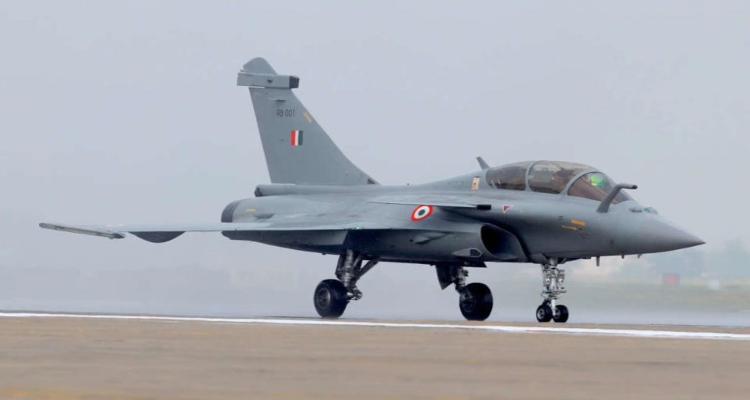
During hearings, the Supreme Court questioned the Centre’s insistence on reserving exactly half the vacancies for women, despite describing JAG posts as “gender neutral.” “If it’s permissible in the Indian Air Force for a lady to fly a Rafale fighter jet, then why is it so difficult for the Army to allow more women in JAG?” Justice Datta asked Additional Solicitor General Aishwarya Bhati. His remarks underscored a tension between operational roles that women increasingly occupy and persisting restrictions elsewhere.
Petitioners’ Grievances
Both officers challenged the “disproportionate vacancies,” pointing out that their superior merit could not overcome the ceiling on women’s posts. “Prima facie, we are satisfied with the case set up by the petitioner, 1 Arshnoor Kaur,” the bench observed. It directed the Army to “initiate whatever action is required for the purpose of her induction in the next available training course for appointment as Judge Advocate General (JAG).” Meanwhile, Astha Tyagi opted to join the Indian Navy while these proceedings were pending.
Centre’s Rationale
In its defence, the government maintained that gender-specific quotas across Army branches are calibrated to “operational preparedness.” Bhati argued that evolving intake policies—from a 70:30 men-to-women ratio, now adjusted to 50:50—reflect manpower assessments and deployment constraints. She cautioned against “judicial imposition of parity or neutrality without factoring operational imperatives,” warning it could “undermine both command and control and operational preparedness of the Army.”
Court’s Further Scrutiny
The bench pressed the Centre on why women who meet or exceed merit thresholds are not simply appointed when vacancies allow. Justice Manmohan noted that “gender neutrality does not mean 50:50 per cent, but it means it does not matter from which gender one is from.” The court also flagged the exclusivity of gender-segregated Services Selection Board (SSB) panels, justified by the need for “intensive physical interactions” during testing.
Wider Implications
This case signals growing judicial scrutiny of gender policies within India’s armed forces, as women take on increasingly diverse roles—from fighter pilots to legal advisors. It raises critical questions: if frontline flying duties are open to women, why must advisory roles remain bounded by quota? The outcome may well reshape how the Army balances merit, gender representation, and operational needs.
As the top court prepares to issue its verdict, stakeholders across the defence establishment and beyond will watch closely. A ruling in favour of the petitioners could prompt rapid policy adjustments, ensuring that gender-neutral appointments in the JAG branch—and potentially other corps—align more closely with merit and evolving notions of equality in service.
Read More: Supreme Court, Delhi High Court, States High Court, International