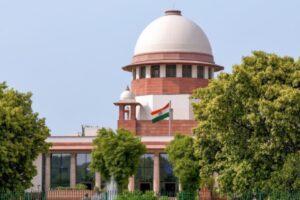




The Supreme Court on Monday agreed to urgently hear a petition filed by Ali Khan Mahmudabad, head of the Political Science department at Ashoka University, who was recently arrested for social media posts concerning Operation Sindoor.
A bench comprising Chief Justice B R Gavai and Justice Augustine George Masih took note of submissions made by senior advocate Kapil Sibal, who is representing the professor. The court said the matter would be listed for hearing either on Tuesday or Wednesday.
“He has been arrested for a patriotic statement. Please list it during the day,” Sibal told the court.
To this, the Chief Justice responded, “Please list it tomorrow or day after.”
Civil Rights Concerns
Professor Mahmudabad was taken into custody on Sunday after two First Information Reports (FIRs) were registered against him. The charges include endangering the sovereignty and integrity of India — among the most serious legal provisions under Indian law.
The social media content in question allegedly related to Operation Sindoor, although the exact nature of the posts has not been publicly disclosed. The professor has maintained that his remarks were misconstrued and that his statements were well within the bounds of constitutionally protected free speech.
FIRs Based On Women’s Panel & Sarpanch Complaints
According to Haryana Deputy Commissioner of Police Narender Kadyan, the FIRs were filed at Rai police station in Sonipat district. One complaint was submitted by Renu Bhatia, Chairperson of the Haryana State Commission for Women. The second came from a local village sarpanch. Both complainants alleged that Mahmudabad’s online remarks were inflammatory and posed a threat to national integrity.
The Women’s Commission had earlier issued a notice to Mahmudabad, questioning his comments. In response, the professor said his views were “misunderstood” and stressed that he was merely exercising his right to freedom of expression under the Indian Constitution.
Academic Freedom
The arrest has triggered a broader conversation about the limits of academic freedom and freedom of speech in India. Mahmudabad, a respected academic known for his work on politics, history, and religion, has drawn support from students and civil liberties advocates who see the arrest as excessive.
With the Supreme Court set to examine the matter within days, the case could have wider implications for how online speech, especially by academics, is scrutinized under national security laws.
Read More: Supreme Court, Delhi High Court, States High Court, International