



Patanjali Ayurved Limited, which runs manufacturing facilities in Haridwar (Uttarakhand), Sonipat (Haryana), and Ahmednagar (Maharashtra), was investigated by the Directorate General of GST Intelligence (DGGI) following intelligence about suspicious transactions.
Authorities noted that certain firms were availing high Input Tax Credit (ITC) without corresponding income tax credentials, suggesting possible circular trading. In April 2024, the DGGI issued a show-cause notice proposing a ₹273.51 crore penalty under Section 122(1)(ii) and (vii) of the Central Goods and Services Tax Act, 2017.
Although the DGGI later dropped tax demands under Section 74 via an adjudication order on January 10, 2025, it opted to continue penalty proceedings. Patanjali challenged the penalty notice before the Allahabad High Court, arguing that Section 122 penalties entail criminal liability and thus require a criminal trial.
Court’s Reasoning
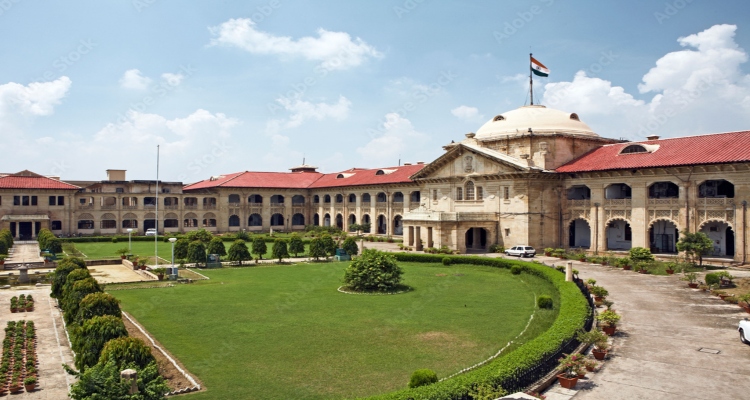
A division bench of the Allahabad High Court, comprising Justice Shekhar B. Saraf and Justice Vipin Chandra Dixit, dismissed Patanjali’s petition on May 29, 2025. The bench rejected the argument that Section 122 penalties are akin to criminal punishment and cannot be imposed without criminal court adjudication. Instead, the court held that penalty proceedings under Section 122 are civil in nature and fall squarely within the adjudicatory jurisdiction of tax officers.
“After detailed analysis, it is clear that the proceeding under Section 122 of the CGST Act is to be adjudicated by the adjudicating officer and is not required to undergo prosecution,” the bench observed in its order.
In other words, once the DGGI issued the show-cause notice, the matter could be decided through civil penalty proceedings without reference to a criminal court. The High Court affirmed that there is no requirement under the GST Act for a parallel criminal trial to determine liability or impose penalties under Section 122.
Facts Unearthed By The Investigation
During its probe, the DGGI discovered that for all product categories under scrutiny, Patanjali’s reported “quantities sold” exceeded “quantities purchased” from suppliers. This discrepancy indicated that the company might have passed on the full ITC availed on paper—rather than based on actual supply—to downstream entities.
Consequently, authorities alleged that Patanjali “acting as a main person indulged in circular trading of tax invoices only on paper without actual supply of goods.”
After examining invoices, input-output registers, and ITC claims, the tax department concluded there was sufficient evidence of irregularities. While the department ultimately withdrew demands for additional tax under Section 74—presumably for reasons such as timing or the nature of documentary evidence—it opted to press ahead with penalties for alleged contraventions under Section 122.
Patanjali’s legal team contended that, by dropping tax demands, the department effectively acknowledged there were no true goods movements to justify penalties. The High Court, however, did not accept this argument.
Court’s Response
Nature of Penalty Proceedings: The company argued that penalties under Section 122 constitute criminal liability and therefore should be imposed only after a criminal trial in a Sessions Court.
Invalid Continuation of Penalty Proceedings: Since the tax demand under Section 74 was dropped, Patanjali maintained that continuing penalties under Section 122 was beyond the department’s authority.
The High Court addressed these points systematically:
Civil Nature of Section 122
The bench emphasized that Parliament deliberately framed Section 122 as part of the civil penalty regime, vesting adjudication in a “proper officer” rather than requiring prosecution in a criminal court. Therefore, no criminal proceedings are necessary before imposing a penalty.
Independent Basis for Penalties: The court held that even though Section 74 tax demands were dropped, the department could still proceed under Section 122 if evidence showed contraventions such as circular trading or issuing “fake” invoices. In other words, penalty liability under Section 122 does not depend on the existence of an outstanding tax demand—it arises from the act of contravention itself.
By rejecting Patanjali’s arguments, the High Court effectively affirmed the department’s power to continue civil penalty proceedings post-Section 74 adjudication.
Implications For Patanjali & GST Enforcement
With the petition dismissed, Patanjali faces the prospect of paying a ₹273.50 crore penalty unless it seeks further relief, such as an appeal to a higher bench or the Supreme Court. This decision underscores two broader points for GST‐regulated businesses:
Distinct Civil Penalty Mechanism: Section 122 penalties are civil in character. Taxpayers cannot avoid them simply by pointing to the absence of a criminal prosecution or by showing that the tax demand under Section 74 was dropped.
Vigilance Over ITC Claims: The investigation highlights the scrutiny placed on large ITC utilizations, especially when beneficiaries lack clear income-tax credentials. Companies must maintain coherent documentation on inward and outward supplies to avoid allegations of circular trading.
So far, nearly ₹300 crore is at stake for Patanjali. The company may now choose to mount a final legal challenge or negotiate with the GST authorities. Regardless, the High Court’s ruling clarifies that, under India’s GST regime, penalties for issuing or claiming “paper” invoices can be pursued through civil adjudication alone—without the procedural safeguards of a criminal trial.
Key Takeaways
The Allahabad High Court confirmed that Section 122 penalties under the GST Act are civil in nature and do not require a criminal trial.
Even if the tax demand under Section 74 is dropped, penalties under Section 122 can continue, provided evidence of contravention (e.g., circular trading) exists.
Businesses should diligently document actual supply chains and ITC claims to prevent large‐scale penalties for “paper” transactions.
Read More: Supreme Court, Delhi High Court, States High Court, International