


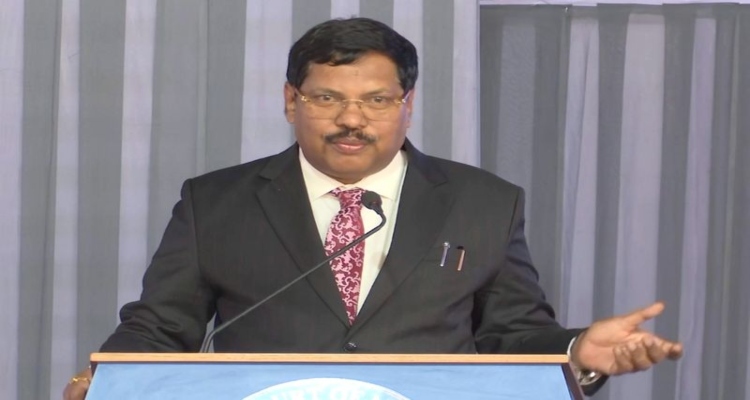
Chief Justice of India B. R. Gavai recently underscored that any hint of corruption or unethical conduct among judges damages citizens’ confidence in the legal system.
Addressing a roundtable at the Supreme Court of the United Kingdom on “Maintaining Judicial Legitimacy and Public Confidence,” he remarked that no institution, however robust, is immune to wrongdoing.
When such incidents surface, he stressed, the judiciary must act swiftly and transparently to uphold its integrity.
“Instances of corruption and misconduct inevitably cast a shadow over the judiciary, undermining the faith people place in its fairness,” CJI Gavai observed. “Prompt and decisive measures are essential to rebuild that trust.”
His comments arrive in the wake of allegations against Allahabad High Court’s Justice Yashwant Varma, where a significant sum of cash was discovered at his official residence in Delhi. The CJI’s message was clear: conformity to ethical standards is non-negotiable, and any breach must be addressed without delay.
Upholding Accountability & Transparency
CJI Gavai highlighted that a democratic judiciary must not only do justice but also be perceived as a body that holds power to account. He argued that “judicial legitimacy” and “public confidence” are intertwined—without community trust, the courts lose moral authority. In India, when allegations arise, the Supreme Court has consistently deployed appropriate inquiries or disciplinary actions to investigate and rectify misconduct.
To bolster openness, CJI Gavai pointed to two significant initiatives by India’s highest court:
Asset Declarations by Judges
Supreme Court judges now publicly disclose their assets. By making these details accessible, the judiciary demonstrates its willingness to be scrutinized similarly to other public servants.
“Judges, as public functionaries, must be accountable. Publishing asset statements sets an example of honest leadership,” CJI Gavai stated.
In an effort to demystify court processes, live-streaming of Constitution Bench hearings began recently. However, the CJI cautioned that while this enhances visibility, it must be managed carefully to prevent isolated comments from being misrepresented.
“Live video is a powerful tool, yet it can be misused—one innocuous remark taken out of context can create misinformation,” he warned.
Concerns Over Post-Retirement Appointments
Another key topic CJI Gavai addressed was the practice of judges accepting government positions immediately after retirement or resigning mid-tenure to pursue political office. He described such moves as raising “serious ethical questions,” potentially giving rise to suspicions that judicial decisions were influenced by hopes of future appointments.
In response to these concerns, he and several fellow justices have pledged not to accept any government roles after leaving the bench, reinforcing their commitment to impartiality.
“If a judge takes a government post right after retirement—or jumps into electoral politics—it casts doubt on judicial independence,” CJI Gavai explained. “To preserve our credibility, many of us have vowed to avoid such engagements.”
By distancing themselves from post-retirement government jobs, these judges aim to eliminate even the appearance of conflicts of interest, thereby safeguarding the judiciary’s reputation for neutrality.
Defending The Collegium System
CJI Gavai also spoke in defense of India’s collegium system for appointing judges to the Supreme Court and high courts. Until 1993, the executive branch held final authority over judicial appointments, occasionally superseding the senior-most judges—a practice that, he argued, weakened judicial autonomy. The collegium mechanism was introduced to reduce political interference and maintain the separation of powers.
“Critics may point to flaws in the collegium, but any alternative must not compromise judicial independence,” he said firmly. “Judges should remain free from external pressures.”
By entrusting selection to a group of senior judges rather than politicians, the collegium aims to ensure that appointees are chosen on merit rather than political favor. CJI Gavai acknowledged that improvements could be made but maintained that preserving a judge-driven appointment process is paramount for a fair judiciary.
Striving For A Credible Judiciary
In his concluding remarks, CJI Gavai reminded the audience that, in a rapidly changing digital age, maintaining public trust requires both visibility and discretion. Judges must balance openness—through tools like live-streaming and asset disclosures—with caution against misinterpretation. Above all, he reiterated, upholding ethical standards at every stage of a judge’s career, including after retirement, is essential to sustain confidence in the rule of law.
“Judicial legitimacy is earned, not commanded. By embracing transparency and accountability, we reaffirm the judiciary’s role as the ultimate guardian of rights,” he concluded.
In voicing these principles, Chief Justice Gavai reaffirmed India’s commitment to nurturing a judiciary that is not only impartial in its decisions but also steadfast in preserving public faith.
Read More: Supreme Court, Delhi High Court, States High Court, International