


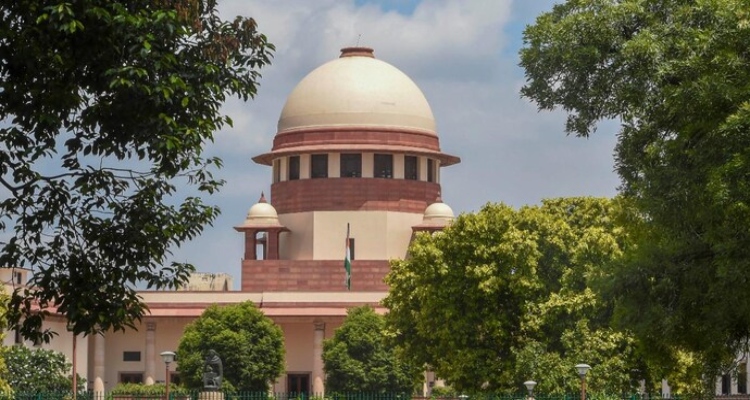
A bench of Justices M.M. Sundresh and K. Vinod Chandran on Monday refused to entertain a challenge to the Bodh Gaya Temple Act, 1949, directing the petitioner to pursue the matter in the appropriate high court rather than under Article 32 of the Constitution.
Petitioner Sought Annulment of 1949 Act
The petitioner had prayed for the 1949 legislation—which governs the management and upkeep of the Mahabodhi Temple complex—to be declared “ultra vires” and thus struck down. When asked for the precise relief sought, the petitioner’s counsel stated:
“I have prayed that the Bodh Gaya Temple Act should be annulled as ultra vires.”
Rather than engage on the merits, the bench observed that a writ under Article 32 was not the correct remedy and advised:
“Why don’t you do it before the high court?”
The court granted the petitioner liberty to file the challenge in the relevant high court, formally disposing of the Supreme Court petition.
Significance Of The Mahabodhi Temple Complex
Situated in Bihar’s Bodh Gaya, the Mahabodhi Temple complex marks the site where Lord Gautam Buddha attained enlightenment under the Bodhi Tree. Declared a UNESCO World Heritage Site, the ensemble comprises:
The 50-metre-tall Mahabodhi Temple
The Vajrasana (Diamond Throne)
The sacred Bodhi Tree
Six additional spots linked to the Buddha’s meditation and teachings
Numerous ancient votive stupas
The Lotus Pond, just outside the main perimeter
These structures sit roughly five metres below the surrounding land, connected by concentric passages on multiple levels, reflecting centuries of continuous worship and regulation.
Origins & Purpose Of The 1949 Act
Enacted shortly after India’s independence, the Bodh Gaya Temple Act was designed to formalize administration, maintain temple property, and preserve its antiquities. It established a management committee to oversee restoration, security, and daily rituals at this pivotal pilgrimage site.
Calls For Management Reform
Earlier this year, former Union Minister Upendra Kushwaha, leader of the Rashtriya Lok Morcha, publicly urged amending the Act to vest full control of the temple’s affairs in the Buddhist community. Advocates of reform argue that, given the temple’s exclusively Buddhist heritage, its administration should reflect the faith and interests of its custodians.
With the Supreme Court declining to exercise its writ jurisdiction, the petitioner will now initiate proceedings in the appropriate high court. That forum will determine whether the 1949 Act’s provisions withstand constitutional scrutiny or require revision to address contemporary calls for community-led management.
Read More: Supreme Court, Delhi High Court, States High Court, International