


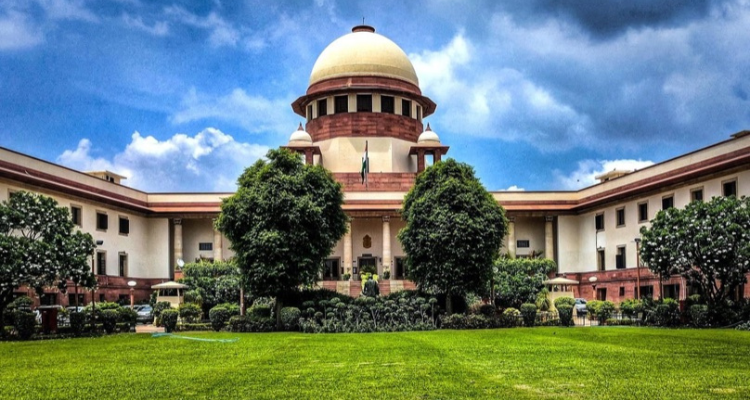
The Supreme Court has taken suo motu cognisance of the controversial practice of investigation agencies summoning lawyers who merely advise or represent clients.
The court will examine whether such actions undermine the independence of the legal profession and violate the client-counsel relationship.
A bench led by Chief Justice B R Gavai, along with Justices K Vinod Chandran and N V Anjaria, will hear the case on July 14, when the court reconvenes after the summer break.
ED’s Summons Raise Alarm Bells
The issue was triggered after the Enforcement Directorate (ED) summoned senior advocates Arvind Datar and Pratap Venugopal. The two lawyers had given legal advice to Care Health Insurance Limited regarding an employee stock ownership plan involving Rashmi Saluja, former chairperson of Religare Enterprises.
The legal fraternity strongly objected to this move. In response to the backlash, the ED, on June 20, issued clear instructions to its officers: no summons should be sent to any advocate representing clients in money laundering cases, except in rare cases and only with the explicit approval of the agency’s director.
The circular highlighted that such summons could breach Section 132 of the Bhartiya Sakshya Adhiniyam (BSA), 2023, which safeguards confidential lawyer-client communication.
“Further, if any summons needs to be issued under the exceptions carved out in proviso to Section 132 of the BSA, 2023, the same shall be issued only with the prior approval of the director, ED,” the ED clarified.
Bar Associations Sound The Alarm
The Supreme Court Bar Association (SCBA) and the Supreme Court Advocates-on-Record Association (SCAORA) both condemned the summons, calling it a “disturbing trend” that could erode the foundation of the legal profession. They urged the Chief Justice to take urgent cognisance.
Responding to these concerns, a bench of Justices K V Viswanathan and N Kotiswar Singh emphasised that the legal profession is central to the fair administration of justice. They warned that giving police or investigative agencies free rein to question lawyers for their professional advice posed a “direct threat” to judicial independence.
Critical Legal Questions
During a related hearing involving a Gujarat-based advocate challenging a summons from the police, the bench highlighted two core questions:
“Some of the questions which arise for consideration are: (1) when an individual has an association with a case only as a lawyer advising the party, could the investigating agency/prosecuting agency/police directly summon the lawyer for questioning?”
The other question was equally vital:
“Assuming that the investigating agency or prosecuting agency or police have a case that the role of the individual is not merely as a lawyer but something more, even then, should they be directly permitted to summon or should a judicial oversight be prescribed for those exceptional criteria?”
The bench noted that resolving these questions is critical because they go to the heart of whether lawyers can fearlessly and independently carry out their duties.
In the Gujarat advocate’s case, the Supreme Court stayed the police’s notice summoning him and directed the state not to pursue him until further orders. The bench underscored that lawyers have rights under Article 19(1)(g) of the Constitution — the freedom to practise any profession — and additional statutory protections by virtue of their role.
Top Court Seeks Broader Input
Recognising the far-reaching implications, the court has called for assistance from the Attorney General, Solicitor General, the Bar Council of India, and the heads of the SCBA and SCAORA. The Registry has been asked to place the case before the Chief Justice for appropriate directions.
This case will be closely watched as it could define important boundaries for how far investigative agencies can go when it comes to lawyers — and ultimately safeguard the fearless practice of law in India.
Read More: Supreme Court, Delhi High Court, States High Court, International