


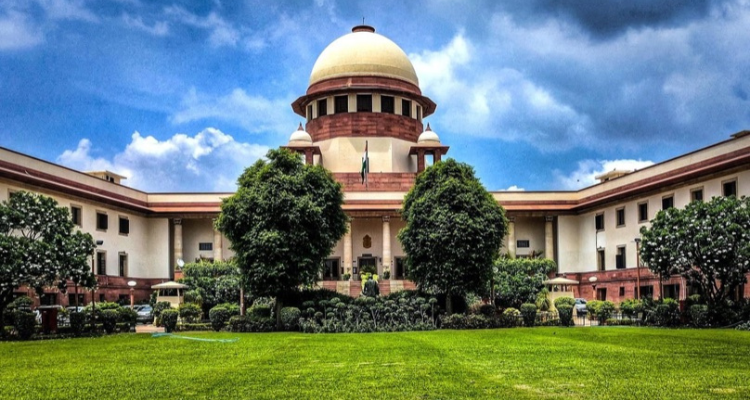
The Supreme Court on Friday threw out a public interest litigation challenging the appointment of Parmar Ravi Manubhai as chairperson of the Bihar Public Service Commission (BPSC).
A bench led by Justices P.S. Narasimha and Atul S. Chandurkar criticized the petitioner for pursuing a case lacking substantive facts.
Bench’s Stern Warning To The Petitioner
Addressing lawyer-petitioner Brajesh, the bench observed that PILs should not be used for “publicity business.”
“If you are filing a PIL then you have to give your life to it… Please do not go behind this publicity business,” the judges admonished.
This remark underscored the court’s impatience with what it viewed as frivolous litigation.
Timeline Of Proceedings
February 3: The Supreme Court issued notices to the Bihar government and to Parmar Ravi Manubhai, seeking their responses to the PIL.
March 15, 2024: Parmar was officially appointed as the BPSC chairperson—an action contested in the petition.
Friday: The apex court refused to entertain the PIL and directed that the matter be closed.
In the interim, the court had designated advocate Vanshaja Shukla as amicus curiae to assist in examining the legal issues raised.
Grounds Of The Challenge
The petition argued that Manubhai’s appointment contravened the constitutional requirement that public service commissioners possess an “impeccable character.” Specifically, it pointed to a pending corruption case against Parmar, registered by Bihar’s vigilance bureau, and currently before a special judge in Patna.
The plea stated, “Thus apparently, respondent number 2 (Parmar) is facing serious charges of committing the offence of corruption and forgery and as such his integrity is doubtful and therefore, he ought not to have been appointed as the chairman of BPSC.”
It further contended that these allegations rendered him ineligible for the constitutional office.
Legal & Constitutional Context
Under Articles 315–323 of the Indian Constitution, state public service commissions must be headed by individuals of unquestioned integrity. While the appointment process involves consultation between the state governor and chief minister, the Supreme Court has long held that such appointments cannot flout basic eligibility norms.
In rejecting the PIL, the bench implicitly affirmed that mere pendency of criminal charges does not automatically disqualify an appointee unless there is a statutory bar or judicial conviction.
Implications & Next Steps
With the PIL dismissed, Parmar Ravi Manubhai’s tenure as BPSC chairperson proceeds unchallenged in the Supreme Court. The decision underscores the judiciary’s insistence on substantiated factual grounds in public interest litigation, and its reluctance to entertain challenges that rest solely on allegations not yet tested in court.
Observers note that the ruling may deter similarly motivated PILs and reinforce the threshold of admissibility for challenges to high-level appointments.
Read More: Supreme Court, Delhi High Court, States High Court, International