


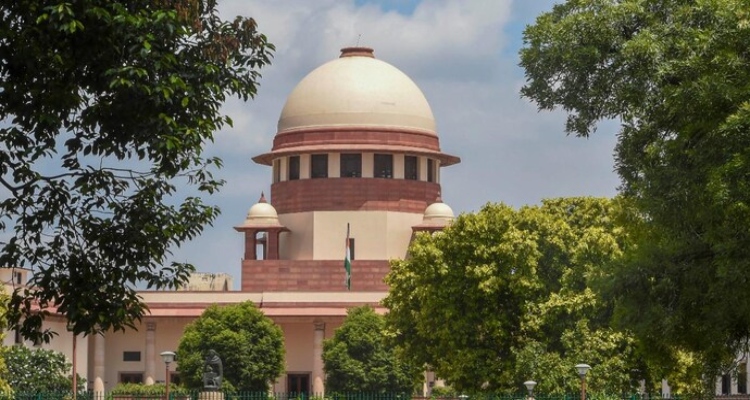
In a strong rebuke to the Enforcement Directorate, the Supreme Court on Monday questioned the agency’s involvement in politically sensitive matters, while upholding a Karnataka High Court decision that quashed proceedings against Karnataka Chief Minister Siddaramaiah’s wife, B.M. Parvati, in the Mysuru Urban Development Authority case.
A bench led by Chief Justice of India B.R. Gavai and Justice K. Vinod Chandran dismissed the ED’s appeal challenging the High Court’s verdict, effectively ending the agency’s pursuit in the case.
CJI To ED: “Why Are You Being Used?”
During the brief but pointed hearing, the court expressed concern over the ED’s perceived misuse in political contexts. Addressing Additional Solicitor General S.V. Raju, who appeared on behalf of the ED, Chief Justice Gavai did not mince words.
“Mr. Raju, please don’t compel us to open our mouths. Otherwise, we will be forced to make some harsh comments about the ED,” the CJI remarked.
Referring indirectly to his own past experience, CJI Gavai added, “Unfortunately, I have some experience in Maharashtra. Don’t perpetuate this violence across the country. Let political battles be fought before the electorate. Why are you being used?”
The court’s remarks underline growing judicial scrutiny of investigative agencies being drawn into politically charged cases, particularly during election cycles or when opposition leaders are involved.
Background
The case stems from an earlier probe involving the allotment of land under the Mysuru Urban Development Authority (MUDA), in which B.M. Parvati, the chief minister’s wife, was named. The Karnataka High Court had quashed the ED’s proceedings, citing lack of substantial evidence and procedural concerns.
The ED sought to challenge this ruling before the Supreme Court, but the top court refused to intervene, effectively backing the High Court’s assessment.
Judicial Signal
By not only dismissing the ED’s appeal but also delivering a pointed caution from the Chief Justice, the Supreme Court has sent a clear message against the politicization of law enforcement agencies. The ruling reflects a broader concern over the integrity and independence of investigative institutions, particularly in a politically polarized climate.
The verdict marks yet another instance where the judiciary has drawn a line between legal scrutiny and political maneuvering, urging institutions to stay within the bounds of constitutional impartiality.
Read More: Supreme Court, Delhi High Court, States High Court, International