


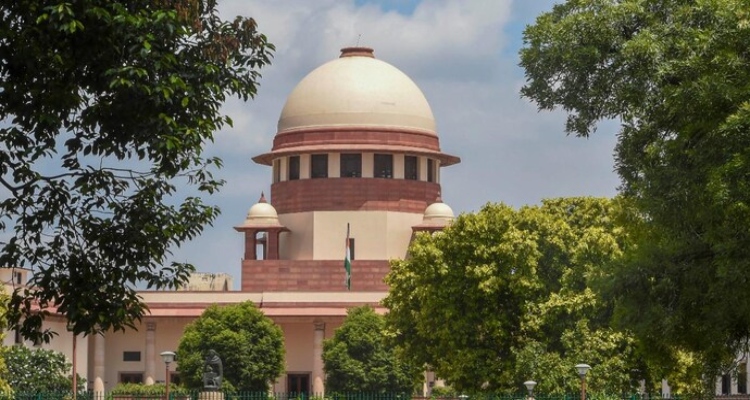
The Supreme Court on Thursday agreed to list a batch of petitions questioning the delay by the central government in appointing judges after their names were reiterated by the Supreme Court Collegium.
The petitions, initially scheduled to be heard in 2023, were dropped from the cause list, prompting senior advocates Arvind Datar and Prashant Bhushan to request urgent listing.
Concerns Over Prolonged Delays In Judicial Appointments
A bench consisting of Chief Justice of India B R Gavai and Justice K Vinod Chandran announced that it would hear the pleas after two weeks. Datar, speaking on behalf of the petitioners, emphasized the growing concern regarding the delay. “There are names of some judges which were reiterated in 2019, then 2020 and 2022, but till now they have not been cleared,” he noted, highlighting that the government’s failure to act on these names has stretched the process over several years.
While a delay of a few weeks might be acceptable, Datar argued that a delay of four years is “not understandable at all.” He pointed out that candidates who have been recommended for judicial appointments often lose interest and seniority over time.
Some have even withdrawn their names, particularly in Delhi and Mumbai, after waiting for extended periods for the government’s approval.
CJI Gavai’s Effort To Resolve Delhi Advocate’s Delay
In response to Datar’s concerns, CJI Gavai shared that he had personally tried to resolve the situation with the Centre in the case of a woman advocate from Delhi. Her name had been recommended but was not cleared. “I tried to persuade on the administrative side,” Gavai said, implying that efforts had been made to expedite her appointment.
Arvind Datar also mentioned that this issue was last addressed by Justice Sanjay Kishan Kaul, and Bhushan raised the specific case of the Delhi advocate, who was a topper from a National Law School, further emphasizing the recurring nature of such delays.
Bhushan’s Remarks On Other Delays & Sub-Judice Matters
Prashant Bhushan also referred to instances where advocates, particularly those recommended for judicial appointments, withdrew their names due to the prolonged delay in clearances. However, when Bhushan tried to draw a parallel with the case of governors and their role in clearing bills, CJI Gavai intervened. Gavai advised Bhushan not to bring up any sub-judice matters, instructing him to “keep his powder dry” for future discussions.
This remark related to a presidential reference currently being heard by the Supreme Court regarding a timeline for governors to clear bills passed by state assemblies.
Court’s Concern Over “Picking & Choosing” Judges For Transfer
The petitions before the Supreme Court also touch upon the government’s selective approach to clearing judicial appointments, particularly the transfer of high court judges. On November 20, 2023, the Supreme Court raised concerns about the Centre’s tendency to “pick and choose” judges for transfer from among those recommended by the Collegium. This selective process, the court pointed out, undermines the integrity of the judicial system and sends the wrong signal about the government’s commitment to the rule of law.
Collegium System Under Scrutiny
The judicial appointments process, governed by the Collegium system, has long been a contentious issue between the Supreme Court and the Centre. The system allows judges to appoint other judges to constitutional courts, but it has been criticized from various quarters for its lack of transparency and accountability.
The ongoing legal proceedings include a petition filed by the Advocates’ Association of Bengaluru, seeking contempt action against the Union Ministry of Law and Justice for failing to adhere to a timeline set by the Supreme Court in a 2021 judgment. This judgment had called for the swift clearance of names recommended by the Collegium for the elevation and transfer of high court judges.
Conclusion
The delay in judicial appointments raises fundamental questions about the relationship between the executive and the judiciary in India. With the Supreme Court actively engaged in scrutinizing the process, the outcome of these hearings could significantly shape the future of judicial appointments and the functioning of the Collegium system.
As the court prepares to hear these urgent pleas, it remains to be seen how the issue of judicial delays will unfold, especially in light of the government’s reluctance to clear long-pending names.
Read More: Supreme Court, Delhi High Court, States High Court, International