


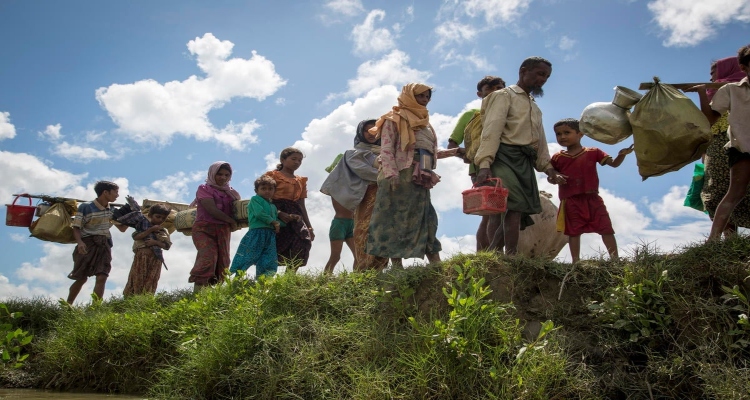
The Supreme Court on Friday outlined the central legal issues involved in a series of cases concerning the status, treatment, and possible deportation of Rohingya refugees living in India.
A three-judge bench comprising Justices Surya Kant, Dipankar Datta, and N Kotiswar Singh listed four broad questions that will guide its consideration of the petitions.
Four Key Legal Issues Identified
In its order, the bench framed the following key questions:
Refugee Status and Rights: Whether the Rohingyas can be legally recognized as refugees, and if so, what protections flow from that recognition?
Deportation of Illegal Entrants: If they are found to be illegal entrants, is the Indian government obligated to deport them strictly according to legal procedures?
Detention and Bail: Can illegal entrants be detained indefinitely, or do they have a right to conditional release or bail?
Living Conditions in Camps: For those not detained but living in camps, are they receiving basic amenities—like sanitation, clean water, and access to education—in line with their rights under Article 21 of the Constitution?
Cases Grouped Into 3 Categories
To streamline the hearing process, the Court divided the pending cases into three distinct categories:
Group 1: Cases specifically related to Rohingya refugees
Group 2: Matters involving non-Rohingya foreign nationals
Group 3: A standalone case initially about a detained husband, which was later expanded by a bench led by Justice Abhay Oka to cover broader detention-related concerns
The Court will begin hearings with the Group 1 cases over three consecutive dates. “We will first decide whether the Rohingyas are refugees or illegal immigrants. Everything else flows from that,” Justice Surya Kant noted during the hearing. The remaining cases will be taken up separately.
Allegations Of Recent Deportation
During a previous hearing on May 8, petitioners had alleged that some Rohingya refugees—many holding UNHCR cards—were picked up by authorities and possibly deported to Myanmar, even while the matter was pending before the Court. The police reportedly claimed it was merely for “paper verification.”
While the petitioners pushed for a stay on such deportations, the Court declined to intervene, pointing to a prior order from April 8, 2021, which already binds the government to carry out deportations strictly according to the law.
Final Hearing Set To Begin July 31
Setting a clear course of action, Justice Kant previously stated:
“We will hear the matters finally… It would be better that instead of passing interlocutory orders of any nature, we take up these matters and decide either way—that if they have a right to stay here, that should be acknowledged, and if they don’t, then follow the procedure and deport as per law.”
Justice Dipankar Datta added:
“They (Rohingyas) are all foreigners and if they are covered by the Foreigners Act, they will have to be dealt with as per the Foreigners Act.”
The Court is scheduled to begin final hearings on the Group 1 matters from July 31.
(Inputs By Sambhav Sharma)
Read More: Supreme Court, Delhi High Court, States High Court, International