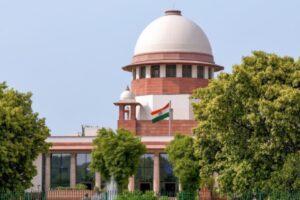



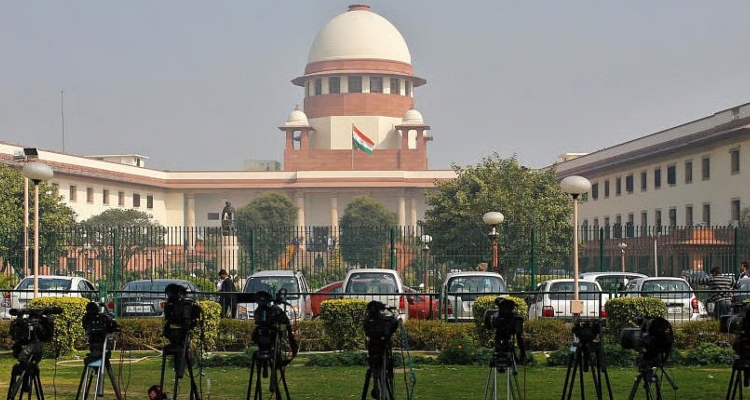
The Supreme Court on Tuesday asked the Uttarakhand High Court to take up a plea by a sevayat (serving priest) of Haridwar’s Maa Chandi Devi Temple, challenging its earlier direction to appoint a receiver from the Badri Kedar Temple Committee (BKTC) to oversee the shrine’s administration.
A bench of Justices Ahsanuddin Amanullah and S V N Bhatti asked the Haridwar district magistrate to examine whether any irregularities or financial lapses had occurred in the temple’s management. The magistrate’s findings are to be placed before the High Court within six weeks.
While disposing of the petition before it, the bench made it clear that the High Court would decide the matter on the basis of the district authority’s report.
Sevayat Questions HC’s Move
The petition, filed by Mahant Bhawani Nandan Giri through advocate Ashwani Dubey, claimed the High Court handed over control of the temple to the BKTC without any complaint or inquiry.
The sevayat argued that a monitoring panel — comprising the Haridwar district magistrate and SSP since 2012 — was already supervising the shrine, and no concerns of mismanagement had ever been raised. He also contended that the order was passed during the hearing of an anticipatory bail plea, which had nothing to do with temple governance.
Ancient Temple & Custodianship
Founded in the 8th century by Adi Shankaracharya, the Maa Chandi Devi Temple has traditionally been managed by the petitioner’s family of priests. The sevayat said the High Court’s directions were issued without notice or hearing, violating the principle of natural justice.
The High Court’s remarks came during proceedings linked to Reena Bisht, who sought anticipatory bail after being accused by Geetanjali, wife of temple head priest Rohit Giri, of trying to run over her son.
On the same day, Rohit Giri was arrested by Punjab Police in a separate molestation case. The High Court noted that he was living with Bisht while divorce proceedings were pending, and that Bisht had recently given birth to his child.
Observing that the trustees had created a “noxious atmosphere” and warning of possible misuse of donations, the High Court ordered that a receiver be appointed.
What Lies Ahead
The High Court will now re-examine the issue after receiving the Haridwar DM’s report. The Supreme Court stressed that the question of temple management must be settled by the state’s highest court in light of the findings.
Read More: Supreme Court, Delhi High Court, States High Court, International