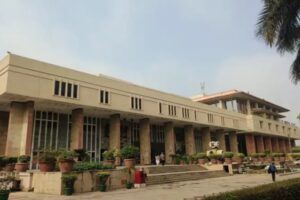



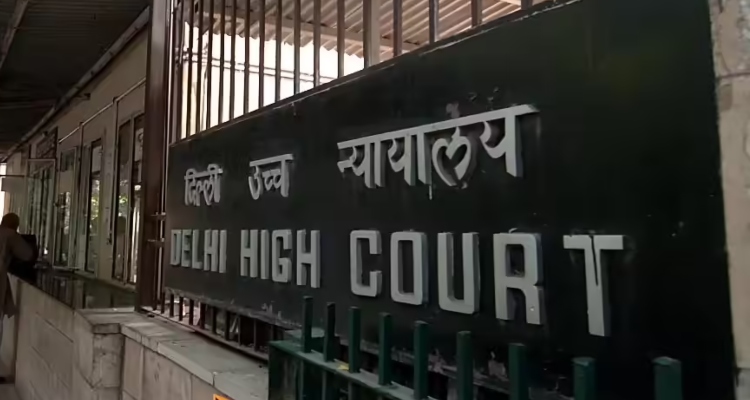
The Delhi High Court on Wednesday issued notices to the Delhi government, CBSE, and NCERT after a Public Interest Litigation alleged that private schools are commercialising education and systematically pushing out students from the Economically Weaker Section category.
The matter came up before a bench of Chief Justice DK Upadhyaya and Justice Tushar Rao Gedela, which directed the respondents to file their replies.
Allegations In The Petition
The PIL was moved by Jasmit Singh Sahni, Director of Doon School, through Advocate Satyam Singh Rajput. Representing him, Advocate Amit Prasad told the court that schools were forcing parents to purchase costly books and materials, burdening families—particularly those admitted under the EWS quota.
The petition argued that this practice violates Section 12(1)(c) of the Right to Education Act, which guarantees 25% reservation for disadvantaged students. While the Delhi government reimburses ₹5,000 per child, parents are often compelled to spend ₹10,000–₹12,000 annually on books alone, forcing many to withdraw their children from school.
Non-Compliance With CBSE, NCERT Rules
The petitioner pointed out that despite CBSE circulars from 2016 and 2017 directing schools to stick to NCERT textbooks, many institutions prescribe private publishers’ books. While NCERT sets cost at roughly ₹700 a year, private alternatives exceed ₹10,000, contradicting CBSE bye-laws that prohibit profiteering.
RTI replies obtained earlier this year showed that NCERT has no mechanism to monitor compliance, and CBSE has no penalty structure for violations, leaving parents at the mercy of schools.
Health Concerns
The petition also highlighted violations of the School Bag Policy, 2020, which says a bag must not weigh more than 10% of a child’s body weight. In practice, children carry 6–8 kg bags, risking long-term physical and psychological harm.
Reliefs Sought
The PIL seeks court directions to:
- Enforce EWS reservation under the RTE Act,
- Ensure exclusive or priority use of NCERT books,
- Regulate prices of private books when NCERT texts are unavailable,
- Implement the School Bag Policy with binding effect, and
- Frame statutory rules with penalties to prevent commercialisation.
Calling the current system exploitative, the petitioner said, “Education is a fundamental right, not a commercial enterprise. A parallel economy worth over ₹55,000 crore has been built on the exploitation of parents and the exclusion of disadvantaged children.”
Read More: Supreme Court, Delhi High Court, States High Court, International