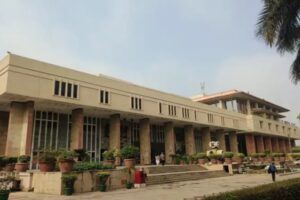



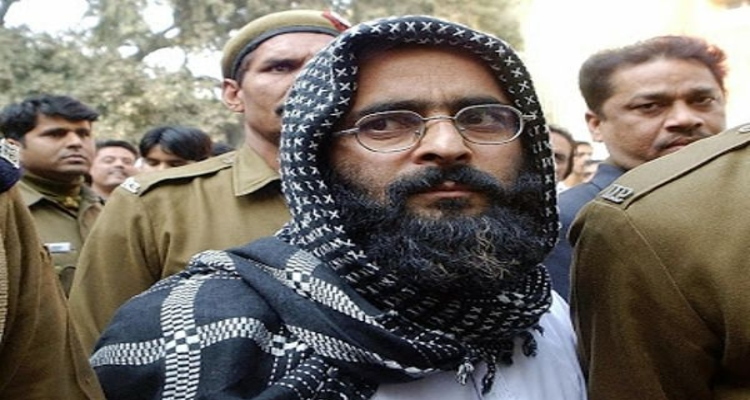
The Delhi High Court on Wednesday questioned the lack of evidence in a Public Interest Litigation seeking the removal of the graves of Parliament attack convict Afzal Guru and Jammu & Kashmir Liberation Front (JKLF) founder Maqbool Bhat from Tihar Jail.
The petition was subsequently withdrawn, with liberty granted to refile it with supporting material.
Bench Questions Lack Of Evidence
A Division Bench of Chief Justice Devendra Kumar Upadhyaya and Justice Tushar Rao Gedela was hearing the PIL filed by Vishwa Vedic Sanatan Sangh through Advocate Barun Sinha.
The petition claimed that the burial sites near Jail No. 3 had turned the prison complex into a “radical pilgrimage spot” for extremist groups, in violation of the Delhi Prisons Rules, 2018 and the Delhi Municipal Corporation Act.
The Bench, however, pressed the petitioner to substantiate the allegations.
“You are saying people are going there and paying homage, but where is the data? Removing a grave which has been there for 12 years… Can we challenge that now?” Chief Justice Upadhyaya observed.
The court also recalled that at the time of executions, the government had decided to bury the convicts inside the jail to prevent any law-and-order disturbances.
Petition Withdrawn
After initial arguments, Advocate Sinha sought permission to withdraw the PIL with liberty to file afresh after collecting data. The court allowed the request and dismissed the plea as withdrawn.
The petition had been filed under Article 226 of the Constitution, seeking urgent intervention for the removal of the graves from Tihar Jail.
The plea argued that the construction and continued presence of the graves of Afzal Guru and Maqbool Bhat inside a State-controlled prison was:
- Unlawful and unconstitutional,
- In violation of prison rules that require disposal of bodies in a manner preventing glorification, and
- Against public interest and national security.
According to the petitioners, the graves had effectively turned Tihar into a “radical pilgrimage site”, where extremist sympathizers could gather to venerate convicted terrorists. Such a development, they contended, sanctifies terrorism, threatens public order, and undermines secular and constitutional values.
Comparisons With Other Terror Cases
The petition further urged the court to direct authorities to relocate the graves to a secure and undisclosed location, pointing to established State practice in other terror cases.
Examples cited included the handling of Ajmal Kasab (Mumbai 26/11 attacker) and Yakub Memon (1993 Mumbai blasts convict), where authorities ensured burials were conducted in secrecy to avoid creating sites of glorification.
Read More: Supreme Court, Delhi High Court, States High Court, International