


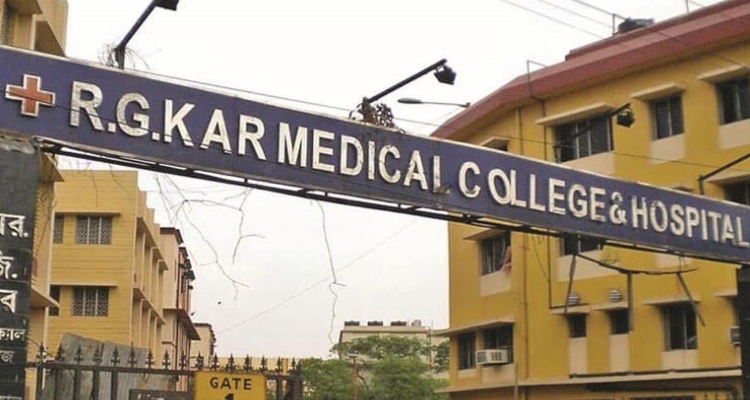
The Supreme Court on Tuesday postponed until November the hearing in the suo motu case related to the rape and murder of a trainee doctor at RG Kar Medical College and Hospital in Kolkata — a crime that shocked the nation and sparked weeks of protests across West Bengal.
A bench of Justices M M Sundresh and Satish Chandra Sharma adjourned the hearing as it was preoccupied with another ongoing matter.
Doctors Seek Protection Amid Police Questioning
During the brief hearing, senior advocate Karuna Nandy, representing the Association of Junior and Senior Doctors, informed the court that several doctors who participated in peaceful demonstrations demanding justice were being summoned for police interrogation. She urged the bench to list the matter for an early hearing, citing continued pressure on protesting medical professionals.
The Supreme Court has been monitoring the case even after the conviction of the accused, focusing on broader issues such as ensuring the safety of doctors and regularising the unauthorised absence of those who participated in protests following the incident.
Case Background
The case dates back to August 9, 2024, when the body of a postgraduate trainee doctor was discovered in a seminar room inside RG Kar Medical College. The next day, police arrested Sanjay Roy, a civic volunteer, who was later charged with rape and murder.
A Kolkata trial court, on January 20, 2025, convicted Roy and sentenced him to imprisonment for life till death.
Initially, the investigation was handled by the Kolkata Police, but the Calcutta High Court, expressing dissatisfaction with the probe, transferred the case to the CBI on August 13, 2024. Days later, on August 19, the Supreme Court took suo motu cognisance of the case, citing the gravity of the crime and the need for systemic reforms.
National Task Force On Doctor Safety
Following the suo motu intervention, the Supreme Court constituted a National Task Force on August 20, 2024, to develop a national protocol for ensuring the safety and security of medical professionals.
Previously in November 2024, the NTF submitted its report — annexed to the Central government’s affidavit — stating that a new central law for the protection of healthcare professionals was not necessary, as existing state laws and provisions of the Bharatiya Nyaya Sanhita (BNS), 2023, adequately cover such offences.
Read More: Supreme Court, Delhi High Court, States High Court, International