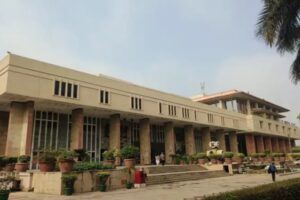



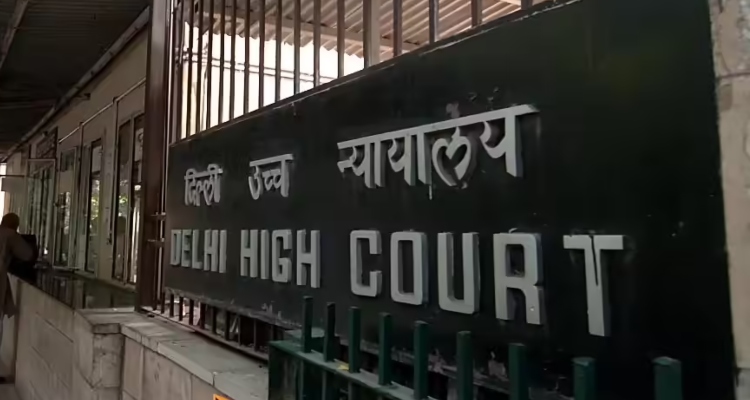
The Delhi High Court on Wednesday clarified that the professional office of a lawyer does not fall under the category of “commercial activity” under the New Delhi Municipal Council (NDMC) Act.
The judgment provides long-awaited relief to legal professionals operating from residential premises, especially in the NDMC area.
22-Year-Old Criminal Case Quashed
Justice Neena Bansal Krishna delivered the verdict while quashing a criminal complaint filed against an advocate back in 2004. The complaint accused the lawyer of misusing the basement of his residence in Golf Apartments, Sujan Singh Park, by running a law office without obtaining prior approval from the NDMC.
The civic body alleged that the use of the residential basement as a law office violated Sections 252 and 369(1) of the NDMC Act, 1994—provisions that restrict any change in the usage of premises without official permission.
Law Practice Not A Commercial Venture
Dismissing the NDMC’s claims, the court categorically stated that the activity of running a lawyer’s office is not commercial in nature. Justice Krishna observed:
“The activity of running an office by a lawyer is not a commercial activity,” adding that the legal profession is “a vocation dependent upon individual qualification and intellectual skill,” and cannot be compared to trade or business aimed at profit.
The court cited multiple precedents, including decisions from the Supreme Court, Bombay High Court, and Delhi High Court, to reinforce the point that legal work is a professional activity and not a commercial enterprise.
Permissible Use Under City Planning Rules
The court also referred to the Delhi Master Plan 2001 and the Building Bye-Laws of 1983. According to these, up to 25% of a residential property can be used for professional purposes—including a lawyer’s office—without violating zoning rules.
Specifically, Clause 14.12.1(vii) of the bye-laws permits basement spaces to be used for office purposes, provided certain conditions are met, such as proper air-conditioning. The court found that the petitioner’s office met these requirements.
Finding no violation of the applicable rules or bye-laws, the court concluded that the continuation of the criminal proceedings after more than 2 decades was unjustified.
“The prosecution has not been able to show any violation,” the court noted, stating that allowing the case to proceed would amount to “an abuse of the process of law.”
Read More: Supreme Court, Delhi High Court, States High Court, International