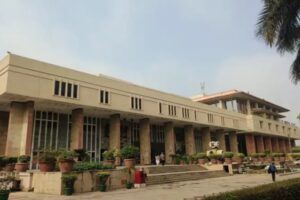



The Delhi High Court on Wednesday directed the counsel for Manoranjan D, Sagar Sharma, and Lalit Jha — accused in the Parliament security breach case — to submit affidavits disclosing their criminal history in line with a recent Supreme Court ruling.
A Division Bench of Justices Vivek Chaudhary and Manoj Jain passed the order while hearing their pending bail pleas, and listed the matter for further hearing on November 10.
Court Seeks Clarity Before Deciding On Bail
The direction comes as part of the court’s effort to ensure complete transparency regarding the background of the accused before considering bail. The affidavits are expected to clarify whether the accused have any previous criminal involvement.
During an earlier hearing in July, while examining Manoranjan D’s bail plea, the High Court made strong oral observations, stating that any attempt to disrupt Parliament proceedings is a grave act with serious national security implications.
Responding to the defence argument that the act was a “peaceful protest” using non-toxic smoke canisters to highlight unemployment, the Bench remarked:
“The best way to create terror in India is to disrupt the Parliament. You disrupted the Parliament.”
December 2023 Parliament Breach
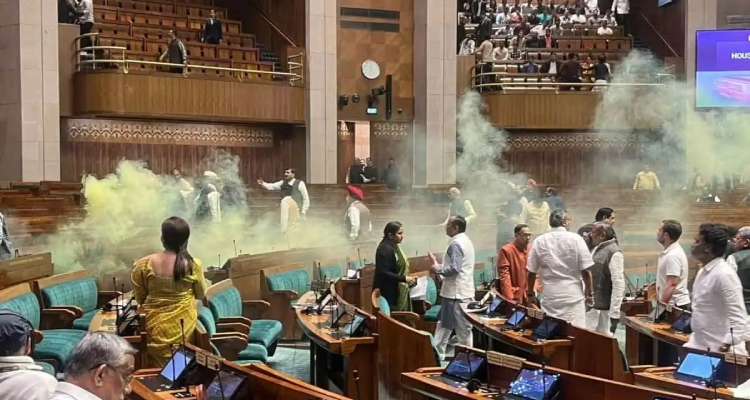
The security breach occurred on December 13, 2023, when Manoranjan D and Sagar Sharma jumped into the Lok Sabha chamber during a live session. Meanwhile, Neelam Azad and Amol Shinde staged protests outside Parliament. All four were later arrested for coordinating the act using coloured smoke devices.
Earlier, the High Court had granted bail to Neelam Azad and Mahesh Kumawat on a ₹50,000 personal bond with two sureties each. The court imposed strict conditions, including no interaction with the media, mandatory visits to the local police station thrice a week, and restrictions on leaving Delhi.
Police Cite UAPA Provisions
The Delhi Police opposed bail for the remaining accused, citing provisions of the Unlawful Activities (Prevention) Act (UAPA), 1967. Investigators argued that the accused posed risks of absconding, influencing witnesses, and obstructing the probe, given their alleged network and influence.
The defence, however, called the invocation of UAPA disproportionate, alleging it was being used to stifle dissent. The accused also claimed they were assaulted inside Parliament premises after the incident.
1,000-Page Charge Sheet Filed
On June 7, 2024, Delhi Police filed a 1,000-page charge sheet against six individuals allegedly involved in the breach, which occurred on the anniversary of the 2001 Parliament attack. The Lieutenant Governor later granted sanction under Sections 16 and 18 of the UAPA, based on a review by the Tis Hazari Committee.
The original FIR, registered on December 14, 2023, included charges under Sections 186, 353, 452, 153, 34, and 120B of the Indian Penal Code, in addition to relevant provisions of the UAPA.
The case was later handed over to the Special Cell’s Counter-Intelligence Unit for investigation.
Read More: Supreme Court, Delhi High Court, States High Court, International