


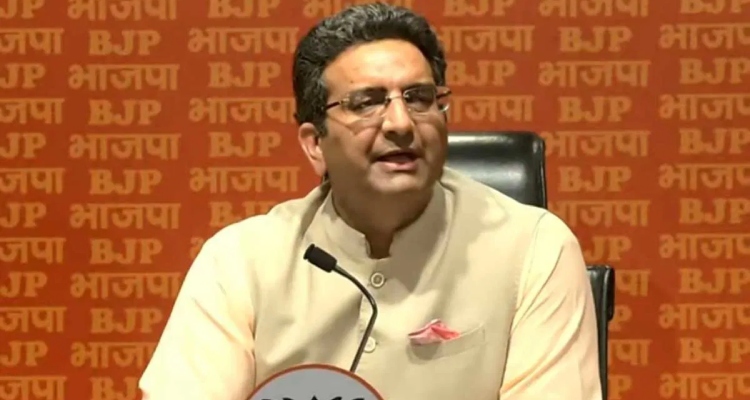
Senior Advocate and BJP spokesperson Gaurav Bhatia has recently approached the Delhi High Court seeking the removal of online content he claims is defamatory, digitally manipulated, and damaging to his reputation.
The case arises from a widely circulated television debate clip and related visuals that surfaced on social media.
Justice Amit Bansal heard the matter on Tuesday and said an interim order is likely to be passed on Thursday.
Bhatia’s Complaint
Bhatia told the court that on September 12, while he was “in the comfort of [his] home,” several unauthorised images and videos were shared online. He alleged that these materials were defamatory, invasive of his privacy, and in some cases contained inappropriate references to male genitalia.
“A person’s reputation is built over time,” Bhatia submitted, urging that all such vulgar or offensive posts be taken down.
He further claimed that some of the visuals were AI-generated or digitally altered to mock him. Referring to a specific incident, he said:
“I was dressed in a kurta and shorts; if a cameraman errs, that doesn’t justify defamatory remarks like ‘I’m coming from a PMO meeting.’”
Court’s Observations
Justice Bansal acknowledged that “obscene remarks are unacceptable,” but underlined the importance of distinguishing between satire and defamation.
“Being in politics requires a thick skin,” he observed, adding that the court must carefully weigh what constitutes satire and what crosses into defamation.
The judge also raised broader concerns about the lack of content moderation on certain online platforms and questioned whether terms like “nanga” (naked) should be treated as inherently offensive.
Role Of Online Platforms
YouTube’s counsel informed the court that of the eight URLs flagged by Bhatia, two were unrelated to the case. The court clarified that any takedown order must first be directed at the original content creators or publishers. Platforms such as YouTube would be held responsible only if those individuals fail to act.
Journalist Abhisar Sharma is among those named in the proceedings.
The matter also highlighted the growing challenges of regulating online speech, manipulated visuals, and the blurred line between political satire and defamation in the digital space.
Read More: Supreme Court, Delhi High Court, States High Court, International