



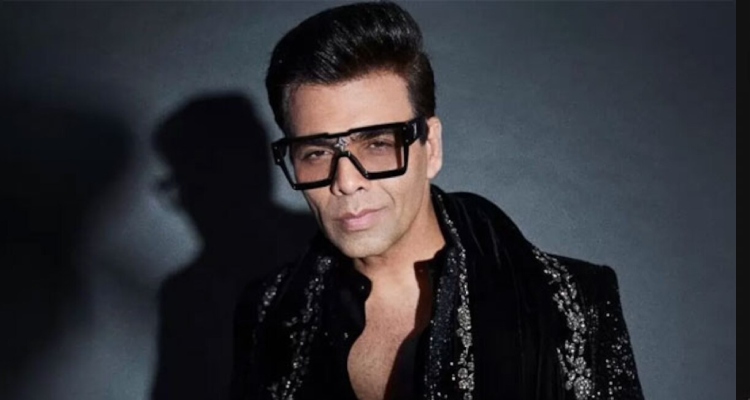
The Bombay High Court on Wednesday refused to lift the injunction preventing the release and promotion of the film Shaadi Ke Director Karan Aur Johar, handing a significant legal victory to filmmaker Karan Johar.
A division bench comprising Chief Justice Alok Aradhe and Justice M.S. Karnik upheld an earlier order by a single-judge bench, finding that the makers had no right to deploy Johar’s name or likeness without his express consent.
Unauthorized Use Of & Persona
At the core of Johar’s petition was the contention that the production, by Indiapride Advisory Pvt. Ltd., had appropriated his identity for commercial gain. The bench agreed, holding that the film’s title created an unmistakable link to Johar in the minds of viewers. In the single judge’s earlier ruling, Justice R.I. Chagla had observed that the title “would likely lead people to associate [the movie] directly with Karan Johar,” thereby infringing his proprietary right over his own name and image.
Plea To Modify Title Rejected
During Wednesday’s hearing, the film’s producer, Sanjay Singh, sought to salvage the project by offering to change the title. His counsel, Ashok Saraogi, urged the court to allow release upon adopting an alternative name. However, the division bench was unpersuaded. While noting that a fresh application could be made before the single judge if the producers wished to propose a new title, the court declined to modify its existing order.
Right Of Publicity & Image Control
The High Court’s decision reinforces the legal principle that public figures possess a “right of publicity”—the authority to control commercial use of their identity. By leveraging Johar’s established brand—his name, career, and persona—the filmmakers overstepped this boundary. Chief Justice Aradhe emphasized that Johar’s consent was indispensable before any commercial exploit of his personal attributes.
Johar’s Original Petition
Johar filed his suit in June 2024, demanding an immediate ban on the film’s release. In compelling terms, he asserted:
“Unless his consent is taken for using his personal attributes, such as his name and profession, there is a violation of such rights.”
This statement, preserved in the court record, underscores the broader concern among celebrities over unauthorized commercial depictions of their lives.
Implications For Filmmakers
The ruling sends a clear message that filmmakers and marketers must secure permission when referencing real-life personalities—particularly when those references form part of the title or promotional strategy. Even subtle alterations may not suffice if the overall impression still evokes the public figure in question. Courts will examine whether an average viewer could be misled into believing the celebrity endorsed or was associated with the work.
With the injunction intact, the producers face a crucial decision: either withdraw the title altogether or obtain Johar’s express authorization. Should they choose the former, they may return to the single-judge bench with a rebranded title for the court’s consideration. Until then, all promotional and distribution activities for the contested film remain on hold.
Conclusion
The court’s judgment fortifies the legal safeguards surrounding a person’s name and likeness, affirming that celebrities cannot be commercialized without their consent. For Karan Johar, it marks not only a personal victory but also a broader precedent protecting public figures from unauthorized exploitation in the Indian film industry.
Read More: Supreme Court, Delhi High Court, States High Court, International