



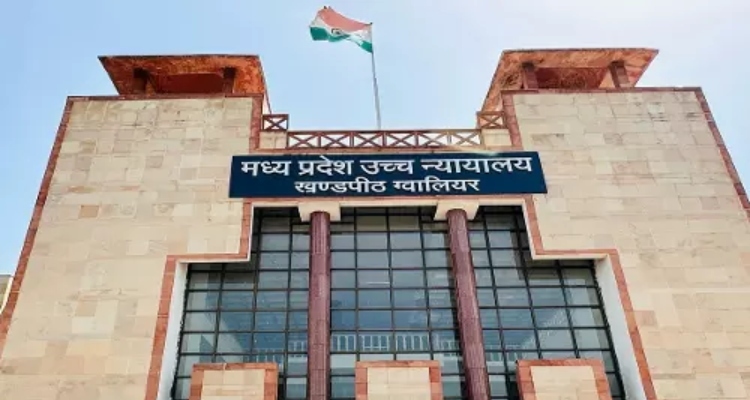
The Madhya Pradesh High Court on Friday dismissed a divorce petition filed by a man, lauding the unwavering commitment of his wife who chose to live with her in-laws even after being deserted.
The court said her conduct epitomised the “ideal Indian wife” who stays rooted in her dharma despite hardship.
A bench of Justices Vivek Rusia and Binod Kumar Dwivedi observed that the woman’s grace, resilience, and dedication reflected the Hindu ideal of a wife as Shakti—“not weak, but submissive and powerful in her endurance.”
The petitioner, a constable in the Special Armed Force, married the woman in 1998 but has been living separately from her since 2006. After a local court rejected his plea for divorce on grounds of “cruelty,” he approached the Indore bench of the High Court.
The judges found the reasons for divorce “shallow and hollow,” noting that even in her husband’s prolonged absence, the wife continued to serve her in-laws “with care and affection, as she would have if her husband was present.”
The bench highlighted that she maintained her marital symbols—mangalsutra, sindoor, and others—not as empty rituals, but as expressions of her belief in marriage as a sanskara (sacrament), “an indelible union” in Hindu tradition.
Dharma Over Desertion
Quoting Hindu cultural principles, the court said an ideal wife, even when deserted, “continues to embody strength, dignity, and virtue.” The woman’s decision to uphold her marital duties despite abandonment was described as being “rooted in dharma, cultural values, and the sanctity of the marital bond.”
Allegations Not Amounting To Cruelty
The husband alleged that his wife avoided marital relations, accused him of having affairs, and complained about his drinking habits. She denied the charges, asserting that the claims were fabricated to justify divorce.
The court found that her suspicion of his relationship with a colleague, expressed in private during legal proceedings, was born out of frustration and could not be considered cruelty—especially since she had not made the accusations public.
Son’s Existence Contradicts Claim
Rejecting the petitioner’s claim that the wife was unwilling to fulfill marital obligations, the bench pointed to the fact that they had a son, now an adult. This, it said, contradicted the assertion and further weakened his grounds for divorce.
In dismissing the plea, the High Court underscored that marriage, as per Hindu philosophy, is an eternal and sacred institution, not easily dissolved by personal grievances. The judgment framed the wife’s conduct as an embodiment of strength and moral dignity, setting a rare example of resilience in the face of desertion.
Read More: Supreme Court, Delhi High Court, States High Court, International