


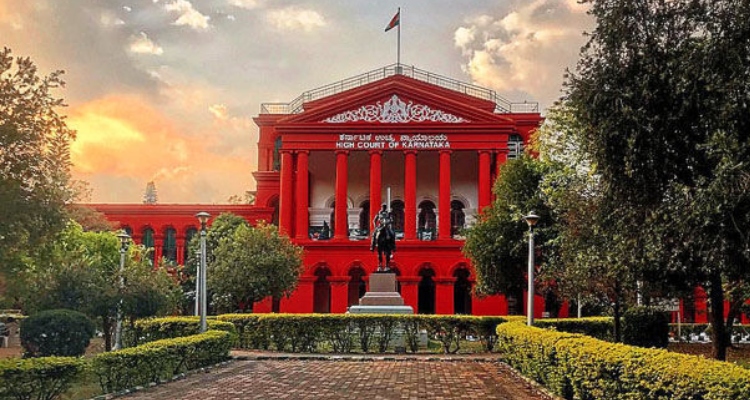
The Karnataka High Court on Monday dismissed petitions challenging the state government’s decision to invite International Booker Prize-winning author Banu Mushtaq to inaugurate this year’s Mysuru Dasara celebrations.
The court reaffirmed that Karnataka is a secular state and ruled that allowing a person of a different faith to participate in a state-organised event does not violate any constitutional principles.
A division bench comprising Chief Justice Vibhu Bakhru and Justice C.M. Joshi heard three petitions, including one filed by BJP leader Pratap Simha, who sought to block the invitation extended to Banu Mushtaq. The petitioners argued that inviting a Muslim author to inaugurate a Hindu festival was inappropriate and hurt religious sentiments.
Referring to the petitions, the court stated, “We are not persuaded to accept that permitting a person of different faith to the function organised by the state violates any legal or constitutional right of petitioners or in any manner opposed to values enshrined in the Constitution of India. Accordingly, petitions are dismissed.” The bench also emphasised, “This is a secular state.”
Banu Mushtaq, a Kannada writer and International Booker Prize winner, was invited by the state government to inaugurate the Dussehra festivities in Mysuru, an event that traditionally begins with Vedic rituals and floral offerings to Goddess Chamundeshwari.
The invitation drew sharp criticism from BJP leader Pratap Simha and others, who questioned the choice of a Muslim writer for a Hindu religious event. Critics further alleged that Mushtaq’s past remarks were “anti-Hindu culture” and claimed that her participation disrespected longstanding traditions and sentiments associated with the festival.
However, the court dismissed these arguments, noting that neither the Constitution nor the law prevents a state from inviting individuals from diverse backgrounds to participate in public events.
Who Is Banu Mushtaq?
Born in 1948 and raised in Hassan, Karnataka, Banu Mushtaq is a celebrated author whose literary work reflects both social and personal struggles. Her first short story was published when she was 27, and she later gained international acclaim with her short story collection Heart Lamp, which earned her the International Booker Prize in May.
Despite professional success, her personal life was marked by significant hardships, including postpartum depression and emotional turmoil within her marriage. At one point, she attempted self-immolation but was saved by her husband. Her writings draw from these experiences, offering poignant reflections on resilience and inner strength.
Read More: Supreme Court, Delhi High Court, States High Court, International