


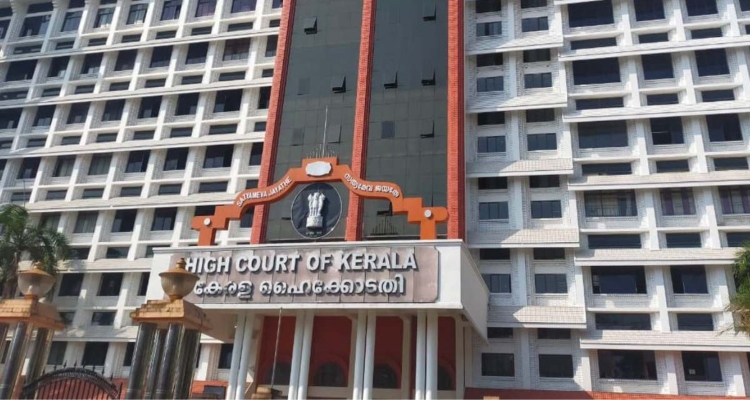
The Kerala High Court has issued a set of directions to the four Devaswom Boards in the state – Travancore, Cochin, Guruvayoor, and Malabar – aimed at improving access to temples for persons with disabilities (PWDs).
The order followed a suo motu case initiated based on a complaint by T. Suganthi, who faced difficulties during her visit to the Sree Vadakkumnathan Temple in Thrissur when she was denied permission to carry her wheelchair inside.
Case Background
The court took up the matter after being informed that persons with disabilities face significant barriers while accessing temples due to narrow passages, architectural constraints, and geographic limitations. The amicus curiae, Advocate V. Ramkumar Nambiar, submitted an interim report outlining practical suggestions for facilitating temple visits for differently-abled devotees.
The Devaswom Boards, however, submitted counter affidavits explaining that implementing uniform solutions across temples is challenging due to their unique structures, historical designs, and limited space.
Court’s Observations
The bench, comprising Justice Raja Vijayaraghavan V. and Justice K.V. Jayakumar, referred to Article 25 of the Constitution and provisions of the Rights of Persons with Disabilities Act, 2016 (RPwD Act). It emphasized that ensuring access for PWDs is not an act of charity but a constitutional and statutory obligation.
The court observed, “Upon a careful reading of the provisions of the Rights of Persons with Disabilities Act, 2016, we are of the considered view that, to give full effect to the guarantees of equality, dignity, and non-discrimination embodied therein, persons with disabilities must be afforded appropriate and reasonable accommodations and be accorded priority in access to facilities and services. Such measures are not a matter of charity but a statutory and constitutional mandate designed to secure substantive equality.”
It further added that “reasonable accommodation” and “priority in access” must guide the efforts of the Devaswom Boards in making temples more accessible.
Key Directions
The court laid out specific measures to be adopted by the temple authorities:
- Consultation with Stakeholders – Boards must work with temple priests (thanthris) and other relevant stakeholders to frame measures suitable for each temple’s circumstances.
- Assessment for Wheelchair Access – Each temple must decide whether wheelchairs can be allowed inside areas like the Nalambalam while adhering to “reasonable accommodation” and “priority in access” principles.
- Fixed Timings for Darshan – Boards should explore setting aside specific days or times for PWDs and publicize these schedules.
- Advance Booking and Virtual Queues – Consideration should be given to enabling advance reservations or virtual queue systems to ensure orderly and hassle-free darshan.
- Additional Accessibility Measures – Other steps necessary to implement the RPwD Act should be identified and acted upon.
- Strict Compliance – The Boards must ensure that these directives are implemented in both letter and spirit.
- The court ordered that decisions on each of the above be finalized and broad guidelines issued within four months from the date of judgment.
Court’s directions mark a significant step toward ensuring temple access for persons with disabilities. By aligning the religious traditions with constitutional guarantees, the court has reinforced the rights of PWDs to worship with dignity, equality, and ease of access.
Read More: Supreme Court, Delhi High Court, States High Court, International