



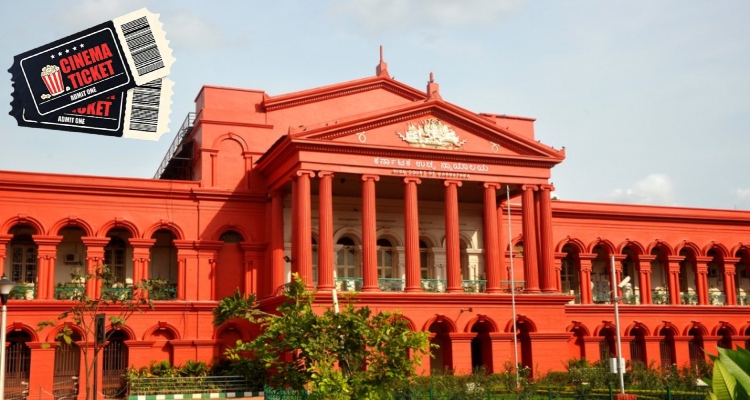
The Karnataka High Court has refused to interfere with a single-judge order that had stayed the enforcement of the Karnataka Cinemas Rules, 2025, which sought to cap cinema ticket prices at ₹200.
On September 23, a single judge had granted interim relief to the Multiplex Association of India and others, putting the new rules on hold.
Appeal By Film Chamber Of Commerce
The Karnataka State Film Chamber of Commerce challenged this stay, prompting a hearing before a vacation bench of Justice Suraj Govindaraj and Justice Rajesh Rai K. While the bench refused to interfere with the earlier order, it expanded the interim arrangement and imposed new accountability requirements on multiplexes.
Accountability Measures For Multiplexes
The court directed the MAI and its members to maintain detailed records of ticket sales, both cash and electronic (excluding GST), and submit monthly statements to the licensing authority by the 15th of every month.
The bench stated, “In case the petitioners fail in their challenge, the electronically collected excess amount can be refunded to cinegoers. Cash transactions will be dealt with by the court at a later stage.”
The order further noted that if the petitioners lose, cash amounts collected in excess could be appropriated for “public good.”
Transparency For Moviegoers
At the State’s request, the court also directed multiplexes to ensure transparency by prominently displaying the order inside cinema halls and screening it before every movie.
The appeal argued that amendments to a statute are presumed valid and cannot be stayed at the interim stage without a full constitutional review.
However, the bench observed that the single judge had considered the possibility of irreversible financial loss to multiplexes if the ₹200 cap were enforced and later invalidated.
In the September 23 order, the single judge also noted that the parent Act did not specifically empower the government to fix ticket prices, casting doubt on the validity of the new rules.
Market Impact Concerns
The order raised concerns that a blanket ticket price cap could distort the film exhibition market. It could force producers and theatre owners to increase the number of shows to recover costs, potentially harming the industry.
The judge had also remarked that the amendment risked treating “unequals as equal and equals unequally,” interfering with contractual arrangements between cinema owners and patrons.
The division bench has posted the matter for further hearing on November 25.
Read More: Supreme Court, Delhi High Court, States High Court, International