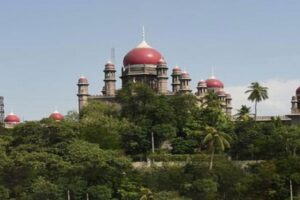



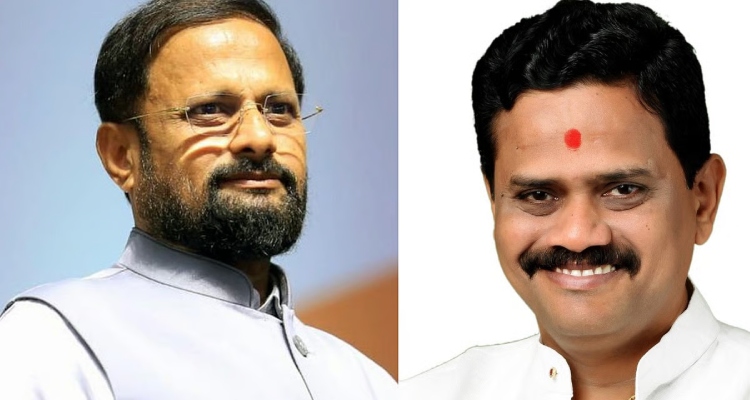
The Bombay High Court on Tuesday rejected the election petition filed by Rajan Vichare, a leader of Shiv Sena (UBT), challenging his defeat in the Thane Lok Sabha constituency.
Vichare had lost the election to Naresh Mhaske of Shiv Sena (Eknath Shinde) in last year’s general elections.
Justice Riyaz Chagla ruled that the petition lacked a valid cause of action, suffered from a fundamental flaw, and was barred under existing law.
Petition Challenged Validity Of Election
Vichare’s petition, filed through advocate Sanjay Gawde, had sought to nullify Mhaske’s election, declaring it void, and to have Vichare recognized as the rightful winner. The petition alleged that Mhaske’s election was marred by misrepresentation and nondisclosure of crucial facts.
Allegation Of False Declaration In Nomination Papers
During the proceedings, senior advocate Darius Khambata, appearing for Vichare, contended that Mhaske had provided false information in his nomination form. According to the argument, Mhaske declared that he had no criminal convictions, despite having been convicted in a riot case, with the appeal having been dismissed by the Thane Sessions Court.
Khambata pointed out that nomination disclosures are essential for the electorate. He said, “The disclosure in nomination is made so that voters know who they are voting for. This is mandatory disclosure. But he has written ‘Not Applicable’ in all and so there is suppression of fact.”
He asserted that voters were deprived of important details that could influence their decision-making.
In the election, Mhaske received 7,34,231 votes, defeating Vichare by a margin of 2,17,011 votes, while Vichare secured 5,17,220 votes. Other candidates collectively polled only a few thousand votes.
Khambata stressed that Vichare had met all procedural requirements, including filing the petition within 45 days of the election outcome and depositing ₹2,000 as mandated by law. He argued that given the straightforward nature of the claim, supported by documentary evidence, the case could be resolved within the prescribed six-month timeframe for election disputes.
“The nomination form cannot be denied and if Mhaske denies his conviction then it will be extraordinary. So it is a short point of law that has to be decided,” Khambata argued before the bench.
Defense Refutes Claims
In response, senior advocate Vikram Nankani, representing Mhaske, rejected the allegations and cited multiple Supreme Court judgments backing his position. He maintained that the nomination disclosures were in order and the case lacked merit.
The court has dismissed the petition but is yet to issue a detailed judgment explaining its full reasoning.
Read More: Supreme Court, Delhi High Court, States High Court, International