



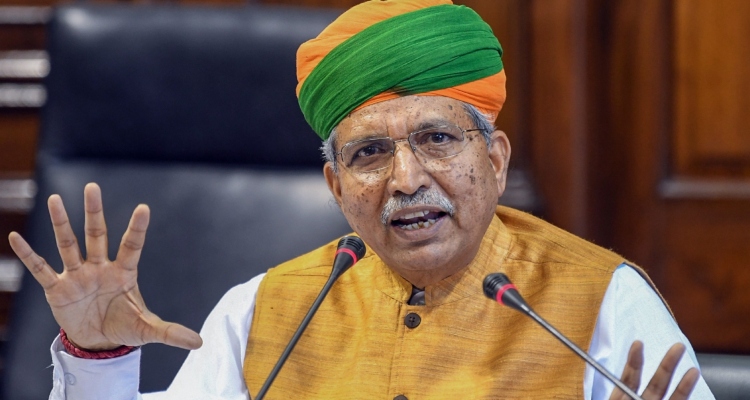
Union Law Minister Arjun Ram Meghwal on Friday called upon citizens to embody the principles symbolised by the national flag — equality, compassion, and brotherhood — in their daily lives.
Speaking at the 79th Independence Day celebrations hosted by the Supreme Court Bar Association on the lawns of the Supreme Court, Meghwal reflected on the history and meaning of the tricolour.
Story Behind The Flag’s Design
Meghwal shared how the Constituent Assembly had set up an ad-hoc committee to finalise the national flag, deciding on the colours and key design elements.
“The three colours and other things were generally selected. But there was a charkha in the midst to which B. R. Ambedkar, a member, objected, saying it would appear to be the flag of a political party. So there was a controversy,” Meghwal said.
Why The Ashok Chakra Replaced The Charkha
According to the minister, the charkha was initially explained as a symbol of continuous work and progress. However, Ambedkar argued that the Ashok Chakra or Dhamma Chakra conveyed the same message more universally.
“When Ambedkar argued, it was explained to him that the spinning wheel meant progress by working round-the-clock, to which he said the Ashok Chakra or Dhamma Chakra had a similar meaning, where all its 24 spokes implied constant movement, work and progress,” he added.
Meghwal stressed that the flag is not just a national emblem but a reminder of values that must guide citizens’ actions. “Equality, compassion, and brotherhood should not remain symbolic; they must be lived and practised,” he said.
Read More: Supreme Court, Delhi High Court, States High Court, International