



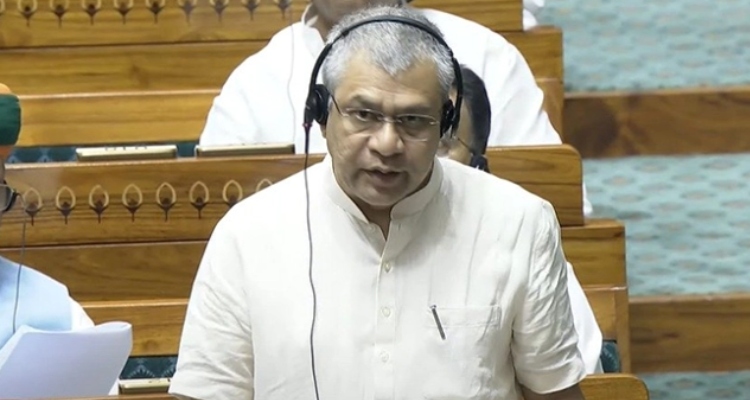
The government on Wednesday introduced a bill in the Lok Sabha seeking to prohibit and regulate online gaming in India.
The move came amid noisy protests by opposition members over the revision of electoral rolls in Bihar, which disrupted proceedings for much of the day.
IT and Communications Minister Ashwini Vaishnaw placed the bill before the House while opposition MPs shouted slogans and waved placards. When the chair invited Congress MP Manish Tewari to present his objections, he declined, insisting that the House must first debate the Bihar issue. RSP leader NK Premchandran also refused to participate, citing disorder.
Parliamentary Affairs Minister Kiren Rijiju criticised the protests, remarking that “even schoolchildren are now mocking the behaviour of parliamentarians.” With the uproar continuing, proceedings were adjourned till 2 PM.
Here Are Some Things About The Proposed Law:
Ban On Money Games & Ads
At its core, the bill seeks to ban online money games—whether based on chance, skill, or both. It also outlaws advertisements and promotions of such games across television, print, and digital platforms.
Financial Restrictions
The legislation proposes a strict clampdown on money flows. Banks and payment gateways would be prohibited from processing transactions linked to online gambling-style games. The government would also have powers under the IT Act, 2000 to block access to unlawful platforms.
Clear Space For eSports
Unlike money games, eSports are recognised as a legitimate competitive activity. The bill directs the Sports Ministry to set guidelines and standards for organising eSports tournaments, while also encouraging non-monetary social games.
Oversight Authority
The Centre is empowered to establish a national regulatory body—or assign the role to an existing authority—to oversee the sector. Its responsibilities would include:
- Registering and classifying online games.
- Certifying whether a game qualifies as a money game.
- Handling user complaints and disputes.
Strict Penalties
- Running or facilitating money games: up to 3 years’ jail and/or a ₹1 crore fine.
- Advertising such games: up to 2 years’ jail and/or a ₹50 lakh fine.
- Processing related financial transactions: up to 3 years’ jail and/or a ₹1 crore fine.
- Repeat offenders would face harsher penalties, including imprisonment of 3–5 years and fines as high as ₹2 crore.
Why It Matters
The bill aims to strike a balance between curbing gambling-style money games—often linked to addiction and financial loss—and supporting eSports as a growing industry in India.
Its formal debate, however, was overshadowed by political protests, leaving a detailed discussion on its provisions for another day.
Read More: Supreme Court, Delhi High Court, States High Court, International