



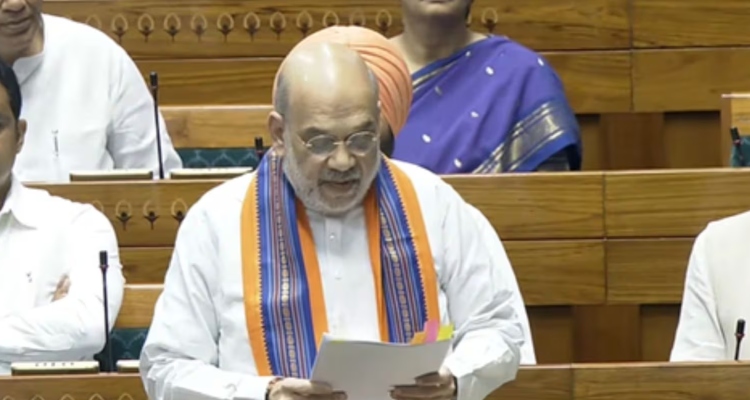
Union Home Minister Amit Shah on Wednesday introduced 3 controversial bills in the Lok Sabha that could radically change the rules for holding public office in India.
The proposals mandate that any minister, chief minister, or even the prime minister would automatically lose their post if they remain under arrest or detention for 30 consecutive days in connection with an offence that carries a sentence of 5 years or more.
The move set off immediate uproar from the Opposition, with slogan-shouting and sharp interventions from Opposition MPs.
“Gestapo Tactics,” Says Owaisi
AIMIM chief Asaduddin Owaisi was among the first to oppose the bills, calling them a dangerous assault on democratic checks and balances.
“This violates separation of powers. It gives executive agencies power to play judge, jury and executioner. This bill would empower the unelected to play the role of the executionary,” Owaisi said.
He warned that the measures could easily be misused for political gain.
“Sections of this bill can be used to destabilise governments. This bill is nothing but creating a gestapo,” he added.
3 Bills At The Centre Of Debate
The government has introduced:
- The Constitution (130th Amendment) Bill
- The Jammu & Kashmir Reorganization (Amendment) Bill
- The Government of Union Territories (Amendment) Bill
Together, these bills seek to establish a new legal framework applicable to Union ministers, the Prime Minister, and state chief ministers, including those in Union Territories like Jammu and Kashmir.
One significant clause states that a leader removed under this framework could be reappointed once released from custody.
Congress Sounds Alarm Bells
Congress MP Manish Tewari also tore into the legislation, branding it “squarely destructive.”
“Indian constitution says there should be a rule of law, and the basis of that is that you are innocent until proven guilty. This bill hopes to change that. It makes an executive agency officer the boss of the Prime Minister,” Tewari said.
He appealed to Speaker Om Birla to allow the Opposition to present their objections in detail before the House proceeds further.
Read More: Supreme Court, Delhi High Court, States High Court, International