


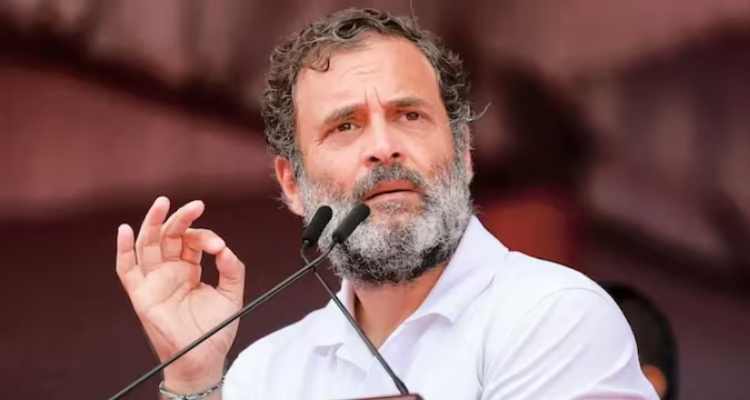
A court in Sambhal district has scheduled August 25 for the next hearing in a complaint filed against Congress leader Rahul Gandhi, his counsel confirmed on Friday.
The date was set by Additional District Sessions Judge (ADJ-II) Aarti Faujdar of the Chandausi court, following an adjournment necessitated by the court’s temporary closure for Bar Association election nominations.
Adjournment Due To Bar Association Elections
On Friday, the Chandausi court was unable to conduct regular business as members and staff were occupied with the Bar Association’s nomination process. As a result, Judge Faujdar deferred the matter and fixed August 25 as the new date for hearing.
Rahul Gandhi’s lawyer, Sagir Saifi, explained, “The work in the court located in Chandausi was stalled on Friday due to the nomination of the Bar Association, due to which the court deferred the matter.”
Origins Of Complaint
The case was initiated by Simran Gupta, president of Hindu Shakti Dal, who took exception to remarks made by Rahul Gandhi on January 15 during a public event. Gandhi is alleged to have stated:
“Our fight is not with the BJP-RSS, but with the State of India.”
Gupta contends that this comment amounted to “disrespect towards the citizens of the country and democracy”, wound public sentiments, and warranted legal scrutiny.
Initial Proceedings
After filing his complaint on January 23, Gupta first approached local authorities—the District Magistrate and Superintendent of Police in Sambhal—but alleged no action was taken. He then moved the court seeking judicial intervention.
The Chandausi court initially summoned Rahul Gandhi to appear on April 4 and respond to the allegations. When the leader failed to file his reply by that date, the court granted an extension to May 7. Despite these earlier deadlines, Gandhi has yet to file a formal reply to the petition.
Legal Framework & Significance
Under Sections 499 and 500 of the Indian Penal Code (IPC), statements defaming or disparaging the government, public institutions, or citizens can attract criminal liability. The petitioner argues that Gandhi’s words not only tarnish the dignity of the state but also undermine democratic norms, thereby justifying a judicial inquiry.
While political leaders frequently face petitions and public interest litigations over controversial remarks, the Sambhal case underscores broader tensions around free speech, political criticism, and legal accountability in India’s democratic framework.
What Lies Ahead
With the next hearing set for August 25, both sides will have another opportunity to present arguments. Rahul Gandhi’s defense is expected to challenge the petitioner’s interpretation of his remarks, possibly invoking the right to free expression under Article 19(1)(a) of the Constitution. Meanwhile, the court will examine whether the petitioner has made out a prima facie case for defamation or contempt of the state.
As the matter moves forward, legal observers will watch closely to see how the court balances the constitutional guarantee of free speech against protections for the state and its citizens against defamatory statements.
The outcome could set a precedent for how courts handle political speech that criticizes or challenges governmental authority.
Read More: Supreme Court, Delhi High Court, States High Court, International