


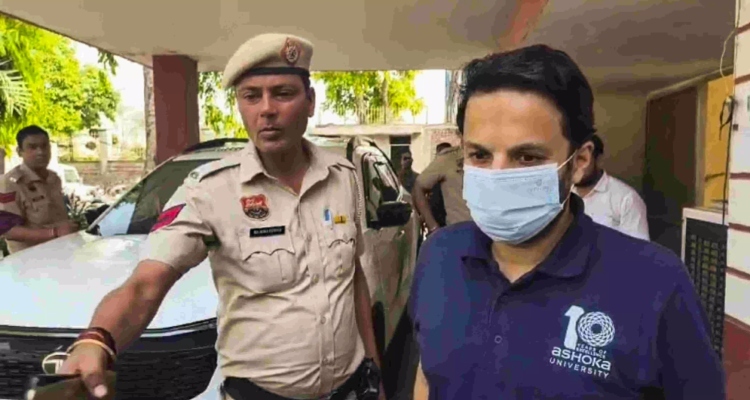
The Supreme Court on Wednesday raised serious concerns about the manner in which the Haryana Special Investigation Team handled the case against Professor Ali Khan Mahmudabad of Ashoka University, who was booked over social media posts related to Operation Sindoor.
A bench comprising Justices Surya Kant and Joymalya Bagchi observed that the SIT had “misdirected itself” and exceeded its brief in the investigation.
Probe Should Focus Solely On FIRs, Says Court
The Court directed the SIT—led by a senior police officer—to restrict its investigation strictly to the two FIRs lodged against Professor Mahmudabad. It asked the team to determine whether any offence was actually committed, and to submit its findings within four weeks.
Highlighting procedural overreach, the bench noted there was no justification for the seizure of Mahmudabad’s electronic devices, including his mobile phones. Since he had been fully cooperating with the investigation, the Court also ruled that further summons were unnecessary.
Bail Conditions Eased
In a significant relief to the professor, the Court relaxed the bail conditions imposed earlier on May 21, which had barred him from posting content on social media. The bench clarified that Mahmudabad is now free to write posts, articles, and express his opinions, as long as he refrains from commenting on the ongoing case, which remains sub judice.
Professor Mahmudabad was arrested on May 18 by the Haryana Police in connection with two FIRs accusing him of making social media posts that allegedly “endangered the sovereignty and integrity of the country.”
One complaint was filed by Renu Bhatia, chairperson of the Haryana State Commission for Women, while the second came from a village sarpanch. Both FIRs were registered by the Rai Police Station in Sonipat district.
His arrest sparked concern among civil rights groups and academics, many of whom described it as an attack on freedom of expression.
Court Underscores Balance Between Free Speech & Legal Process
While the Supreme Court refrained from commenting on the merits of the case, its directives made clear that it expects law enforcement to proceed with caution, precision, and proportionality. The judges’ emphasis on restricting the scope of the SIT and protecting the professor’s right to free expression underscores the Court’s attempt to balance national security concerns with constitutional freedoms.
The matter is expected to be taken up again once the SIT submits its report in four weeks.
Read More: Supreme Court, Delhi High Court, States High Court, International