



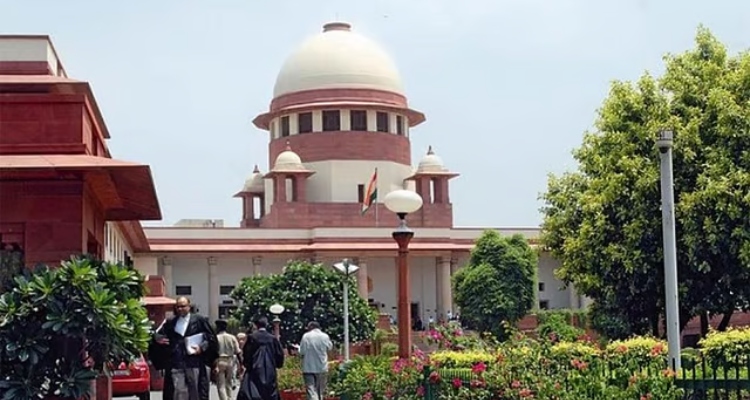
The Supreme Court has directed the Uttar Pradesh government to respond to separate petitions filed by Samajwadi Party leader Azam Khan’s wife, Tazeen Fatma, and their son, Abdullah Azam Khan, who are seeking suspension of their conviction in the alleged forged birth certificate case.
A bench led by Chief Justice B R Gavai, along with Justices Satish Chandra Sharma and K Vinod Chandran, issued notice on the pleas and posed a key question to their counsel, advocate Nizam Pasha:
“The stay of conviction has to be done in rare cases. Suspension of sentence is usually done,” remarked the CJI.
Challenge To The Court’s Refusal
Fatma and Abdullah moved the Supreme Court after the Allahabad High Court declined to stay their conviction in October 2023. While the high court had suspended the sentence awarded by a Rampur trial court, it refused to interfere with the conviction.
The refusal effectively sustained their disqualification under Section 8(3) of the Representation of the People Act, 1951, barring them from contesting elections or holding key trust positions.
Their petitions argue that the refusal has caused “far-reaching and irreversible consequences” for both their political careers and social reputation. The plea calls the high court’s reasoning “erroneous and unsustainable”, stressing that there is no material evidence proving forgery.
No Proof of Forgery, Claims Petition
According to the petition, even the high court acknowledged that no material had been placed on record to show that Fatma, Azam Khan, or Abdullah forged the certificate dated January 21, 2015.
The controversy began with an FIR lodged on December 17, 2018, at Rampur’s Ganj police station by BJP leader Akash Saxena. The complaint alleged that Azam Khan and his wife had procured two separate birth certificates for their son.
The first certificate (June 28, 2012) was issued by the Rampur Municipal Corporation and recorded Rampur as the place of birth, based on affidavits submitted by Azam Khan and Fatma.
The second certificate (January 21, 2015), issued by Lucknow Municipal Corporation, relied on records from Queen Mary’s Hospital, Lucknow, listing Lucknow as the place of birth.
Trial Court Conviction & Appeals
Following the FIR, police filed a chargesheet in April 2019 under Sections 420, 467, 468, and 471 of the IPC. A supplementary chargesheet adding Section 120-B (criminal conspiracy) was filed in August 2021. The Rampur trial court eventually framed charges and, in October 2023, convicted Azam Khan, Fatma, and Abdullah Azam under various provisions of the IPC.
The family has since filed appeals, but the conviction remains in force, leaving Fatma and Abdullah disqualified from electoral and institutional positions despite their sentences being suspended.
Read More: Supreme Court, Delhi High Court, States High Court, International