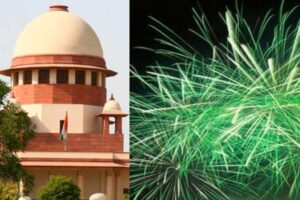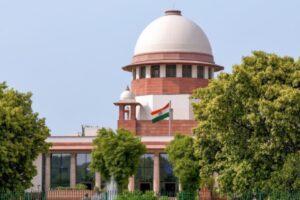



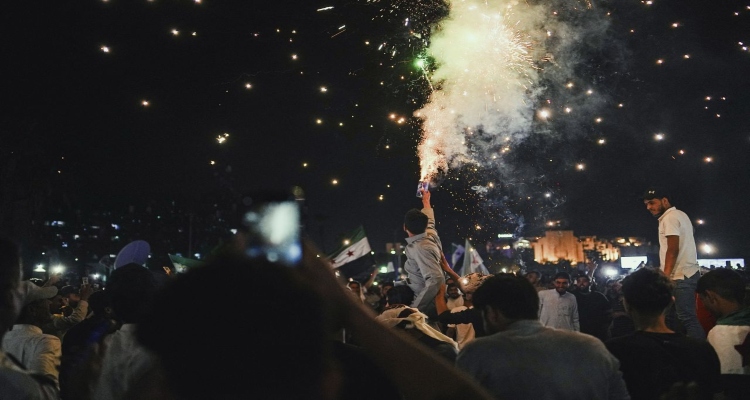
The Supreme Court has raised critical questions about why firecracker bans are limited to the Delhi-National Capital Region when other Indian cities also suffer from high levels of air pollution.
The court stressed the need for a uniform, nationwide approach to firecracker regulation.
“Clean Air Not Just for NCR Citizens”: Chief Justice
A bench led by Chief Justice of India (CJI) BR Gavai observed that environmental policies like firecracker bans should not be restricted to Delhi-NCR alone.
“We can’t have a policy just for Delhi because they are elite citizens of the country. I was in Amritsar last winter and the pollution was worse than Delhi,” the CJI noted, adding, “If firecrackers are to be banned, they should be banned throughout the country.”
Plea For Nationwide Ban
The court issued notice to the Commission for Air Quality Management (CAQM) on a petition seeking a pan-India ban on firecrackers, especially ahead of Diwali, a festival closely associated with firework celebrations.
Supporting the bench’s concerns, Senior Advocate Aparajita Singh remarked,
“Elites take care of themselves. They go out of Delhi when there’s pollution.”
The court’s observations come just weeks before Diwali, which usually falls between October and November, a time when air quality across northern India drops drastically due to fireworks, stubble burning, and changing weather patterns.
Firecracker Bans So Far: A Timeline
Firecracker restrictions have been in place across Delhi-NCR over the past year, with several court-backed directives:
- December 19, 2024: The Delhi government announced a year-round ban on the manufacture, sale, storage, and bursting of firecrackers.
- January 17, 2025: The Supreme Court extended the ban to NCR districts in Uttar Pradesh and Haryana until further notice.
- April 3, 2025: The Court refused to allow seasonal exemptions or permit “green crackers,” reinforcing a full-year ban.
- May 2025: The Supreme Court ordered strict enforcement of the April ban under Section 5 of the Environment (Protection) Act, 1986, warning that non-compliance could lead to contempt of court.
If the Supreme Court accepts the plea for a countrywide firecracker ban:
- All states could be mandated to implement similar restrictions currently in place in Delhi-NCR.
- Enforcement could fall under existing environmental laws, including penalties for violation.
- Diwali celebrations may be reshaped, with tighter controls on firecracker use, heightened enforcement, and a stronger push toward eco-friendly alternative.
- Such a decision could reset public policy and expectations, especially in the lead-up to Diwali, making air quality a central issue not just in Delhi, but across India.
Read More: Supreme Court, Delhi High Court, States High Court, International