



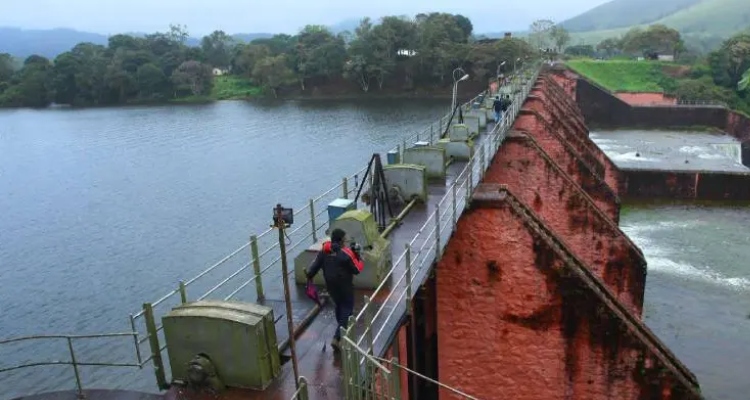
The Supreme Court on Monday issued notices to the Central government and the State of Tamil Nadu on a petition demanding the decommissioning of the 130-year-old Mullaperiyar dam in Kerala and the construction of a new dam at the same site.
A Bench of Chief Justice of India B R Gavai and Justice K Vinod Chandran sought responses from both governments on a plea filed by the Save Kerala Brigade, a Kerala-based organisation advocating for dam safety and environmental protection.
Bench Notes Age & Safety Concerns
During the hearing, CJI Gavai observed that the Mullaperiyar is among the oldest dams in India. Supporting this observation, Senior Advocate V Giri, appearing for the petitioner, said, “The dam is around 130 years old,” and warned that its continued use posed “serious safety concerns.”
“But the life of about 10 million people are at risk of loss,” Giri submitted, underscoring the potential danger to residents living downstream.
Court Suggests Expert Evaluation
In response, CJI Gavai said the court could consider issuing directions to strengthen the existing dam or appoint an expert panel to assess its condition. However, Justice Chandran noted that since the dispute involves two States, the petitioners must clearly explain the structural deficiencies before seeking the construction of a new dam.
“But you have to explain what exactly the problem is because if another dam is built then Tamil Nadu water…?” Justice Chandran remarked, referring to Tamil Nadu’s dependence on Mullaperiyar for irrigation and drinking water.
Senior Advocate Giri argued that only the Supreme Court had the authority to issue directions for building a new dam in the region. Taking note of the submissions, the Bench issued notices to the Centre and Tamil Nadu and sought their replies.
Constructed during the British era, the Mullaperiyar dam has been a longstanding flashpoint between Kerala and Tamil Nadu. Kerala has repeatedly expressed fears that the dam, located in a seismically active zone, is structurally weak and could endanger millions in the event of a collapse. Tamil Nadu, on the other hand, has maintained that the dam is safe and essential for supplying water to five of its southern districts.
Prior Court Orders
In 2014, the Supreme Court ruled in Tamil Nadu’s favour, declaring the dam safe and allowing the water level to be maintained at 142 feet. It also set up a supervisory committee to monitor the dam’s operations.
However, following the 2018 Kerala floods, the apex court temporarily capped the water level at 139 feet, pending further safety assessments.
Read More: Supreme Court, Delhi High Court, States High Court, International