



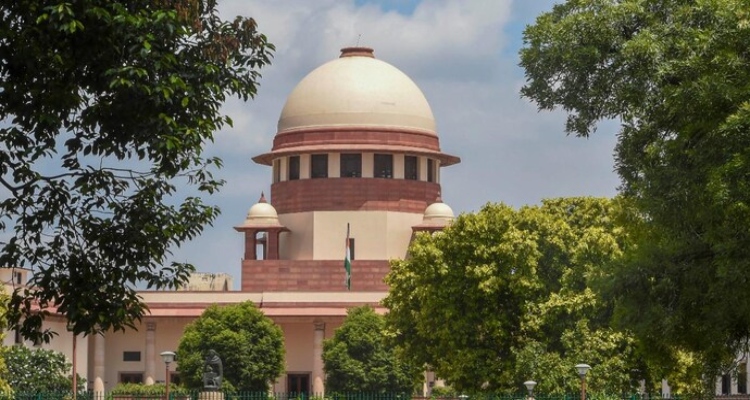
The Supreme Court on Wednesday granted a three-month furlough to Sukhdev Yadav, alias Pehalwan, one of the convicts in the 2002 Nitish Katara murder case, noting that he has served 20 years of incarceration without remission.
A bench comprising Justices Ujjal Bhuyan and K. Vinod Chandran observed that Yadav had undergone two decades of continuous imprisonment and deemed it appropriate to allow temporary release. The Court directed that Yadav be produced before the trial court within seven days, where conditions for the furlough will be formally set.
Crucially, the bench also instructed that the safety and security of Neelam Katara, mother of the victim, be taken into account while implementing the order.
Appeal Pending On Remission
Yadav has petitioned the Court seeking remission of his sentence, having completed 20 years in prison without any relief. The present furlough was sought pending the Supreme Court’s adjudication on this appeal. The original sentence was handed down on February 6, 2015, when the apex court upheld the conviction and imposed a rigorous life sentence, explicitly defined as “20 years of actual imprisonment without consideration of remission.”
Case Background
Sukhdev Yadav, along with co-accused Vikas Yadav and Vishal Yadav, was convicted for the abduction and murder of Nitish Katara, a young business executive, on the intervening night of February 16–17, 2002. The murder was motivated by Katara’s romantic relationship with Bharti Yadav, sister of Vikas Yadav and daughter of former Uttar Pradesh politician D.P. Yadav.
Katara was abducted from a wedding function, following which he was brutally killed in what was widely perceived as an “honour killing.” The case drew national attention due to the political influence of the accused and the brutal nature of the crime.
Implications & Safeguards
The grant of furlough to Yadav—though temporary—is significant, particularly given the severity of the sentence and the socio-political sensitivities surrounding the case. By explicitly ordering that Neelam Katara’s safety be a priority, the Court acknowledged the need to balance prisoner rights with the ongoing concerns of victims’ families.
The furlough does not affect the outcome of Yadav’s pending remission application, which the Court is yet to decide. Further hearings will determine whether his sentence may ultimately be reduced or commuted.
Read More: Supreme Court, Delhi High Court, States High Court, International