


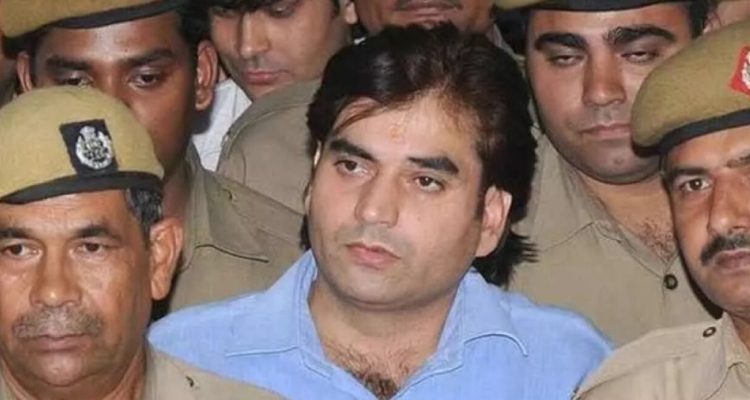
The Supreme Court on Tuesday extended for a week the interim bail of Vikas Yadav, convicted in the 2002 Nitish Katara murder case and serving a 25-year sentence.
A bench of Justices Dipankar Datta and A.G. Masih was hearing Yadav’s plea challenging the August 22 Delhi High Court order, which had refused to extend his bail granted earlier by the apex court on July 29.
The 54-year-old has already spent over 23 years behind bars. He sought the extension citing two reasons: his marriage scheduled for September 5 and the need to arrange ₹54 lakh to pay the fine imposed at sentencing.
Jurisdictional Issue
The bench noted that the matter should be heard by the bench led by Justice M.M. Sundresh, which had passed the July 29 order. The Delhi High Court, on August 22, adjourned the case till September 2, expressing hesitation over whether it had the jurisdiction to extend the interim bail.
The court endorsed this view, pointing out that Yadav’s conviction had been upheld at every stage.
“The High Court prima facie seems to be justified in its opinion that once this Court had affirmed the decision of the High Court that the petitioner would not be entitled to any remission, it lacked the jurisdiction to grant the petitioner’s prayer. If at all, it is this Court which can consider and grant relief,” the bench observed.
Case Background
Yadav is the son of Uttar Pradesh politician D.P. Yadav. His cousin, Vishal Yadav, was also convicted in the kidnapping and murder of Nitish Katara, a business executive. The crime was linked to Katara’s alleged relationship with Bharti Yadav, Vikas’s sister, which the family reportedly opposed due to caste differences.
Another co-convict, Sukhdev Pehalwan, received a 20-year sentence without remission. The Supreme Court, on July 29, ordered his release after he completed his full term in March this year.
Why The Extension Matters
The court’s decision to extend Yadav’s bail gives him temporary relief but also underscores that only the apex court can decide on such requests after having upheld the conviction. The matter will now be taken up by the appropriate bench for further consideration.
Read More: Supreme Court, Delhi High Court, States High Court, International