


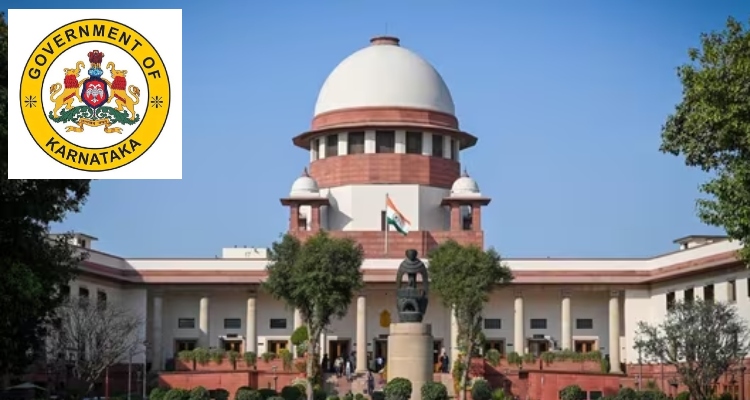
The Congress-led Karnataka government on Tuesday argued before the Supreme Court that, under the constitutional framework, the President and governors are only “titular heads”, bound to act on the aid and advice of the council of ministers at both the central and state levels.
The submission was made during the 8th day of hearings before a 5-judge Constitution bench headed by Chief Justice BR Gavai.
Senior advocate Gopal Subramanian, representing Karnataka, stated that Article 361 of the Constitution grants immunity to the President and governor from any criminal proceedings because they do not perform executive functions themselves. He explained that their role is largely ceremonial, and real decision-making power rests with the elected government.
He further submitted that “the satisfaction of governor required for acting on bills passed by assembly, is the satisfaction of the council of ministers,” citing various verdicts of the apex court. Subramanian emphasized that the Constitution does not contemplate a parallel structure of governance at the state level that operates independent of the elected government.
Judiciary’s Role
During the hearing, Chief Justice Gavai posed a question regarding Section 197 of the CrPC, which pertains to prior sanction for prosecuting public servants. He asked whether the government must act on the advice of the council of ministers even in such cases.
In response, Subramanian acknowledged that several judgments have held that “the governor acts independent of aid and advice of the council of ministers and exercises its discretion with regard to section 197 of CrPC.” This acknowledgment shows that while the governor generally follows ministerial advice, exceptions exist where discretion is permitted under specific provisions.
WB Argues Against Governors’ Discretion
In related hearings on September 3, the West Bengal government submitted before the court that the people’s will, expressed through a bill, cannot be subject to the “whims and fancies” of governors or the President. The TMC-ruled state argued that governors cannot question the legislative competence of bills passed by state assemblies, as such examination belongs to the judiciary, not the executive.
Court’s Larger Constitutional Inquiry
The Supreme Court is currently examining 14 questions referred by President Droupadi Murmu, including whether constitutional authorities can indefinitely withhold assent to state assembly bills and whether courts can impose timelines on such decisions.
Previously in the month of May, President Murmu invoked Article 143(1) to seek clarity from the court on whether judicial orders could mandate timelines for the exercise of discretion by the President while dealing with legislative proposals.
Read More: Supreme Court, Delhi High Court, States High Court, International