


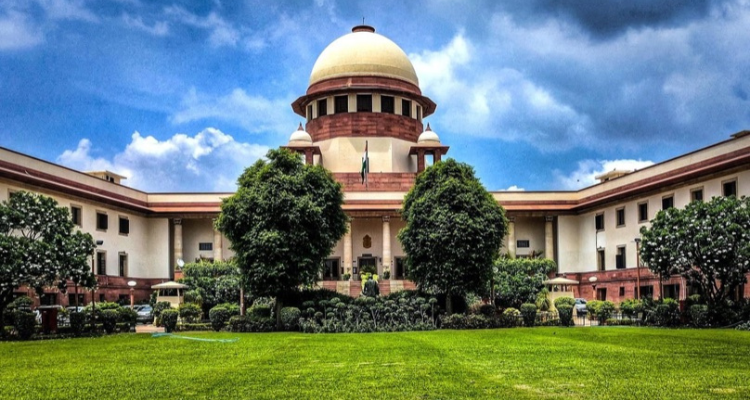
The Supreme Court of India on Friday agreed to hear a petition seeking directions to the Election Commission of India to create regulatory guidelines for the registration and functioning of political parties.
The objective, according to the petitioner, is to promote secular values, transparency, and political accountability in the electoral process.
A bench composed of Justices Surya Kant and Joymalya Bagchi issued notices to the Central Government, ECI, and the Law Commission of India, following the submission by petitioner Ashwini Kumar Upadhyay, who appeared in person.
Court Seeks Inclusion Of Political Parties In Proceedings
While expressing readiness to proceed, the court observed that no political party had been named as a respondent. Justice Kant noted that absent their inclusion, the court’s directions could be challenged. “They may argue that you are seeking to regulate them without their presence,” the bench remarked, instructing the petitioner to implead all national parties registered with the election authority before the next hearing.
The petition raised serious concerns regarding fraudulent political outfits that, according to Upadhyay, pose a threat to democratic governance. It alleged that numerous unregulated political groups appoint individuals with criminal records—including kidnappers, drug traffickers, and money launderers—to leadership positions in exchange for substantial payments.
The petitioner also pointed to reports suggesting that certain fake political parties were used to launder unaccounted funds, with one case highlighting a scheme where 20% of black money was allegedly converted into white money.
Call For Rules To Ensure Accountability
The petition argued that political parties, as public entities, should operate under strict frameworks ensuring accountability and integrity.
It stated, “Given the role political parties play in public life, their functioning must be governed by rules that ensure transparency and responsibility. The ECI must create guidelines to this effect.”
It further noted that the apex court has historically championed reforms aimed at rooting out corruption and enhancing public trust in democratic institutions. The plea argued that bringing political parties under regulatory oversight would bolster democracy and prevent misuse of power.
In addition to requesting immediate regulatory guidelines, the petition sought that the Law Commission of India be directed to study how established democracies regulate political parties. It urged the Commission to prepare a comprehensive report that could serve as a blueprint to curb criminal influence and financial malpractice in political organisations.
Constitutional Values
The court’s willingness to entertain the petition reflects growing concerns over the misuse of political platforms by unscrupulous elements. The petitioner emphasized that regulation in line with constitutional principles would not only ensure a healthier political environment but also reaffirm citizens’ faith in democratic institutions.
The matter is now set for further hearing after the petitioner adds the national political parties to the case, allowing the court to comprehensively address issues related to the criminalisation and opacity of political organisations in India.
Read More: Supreme Court, Delhi High Court, States High Court, International