


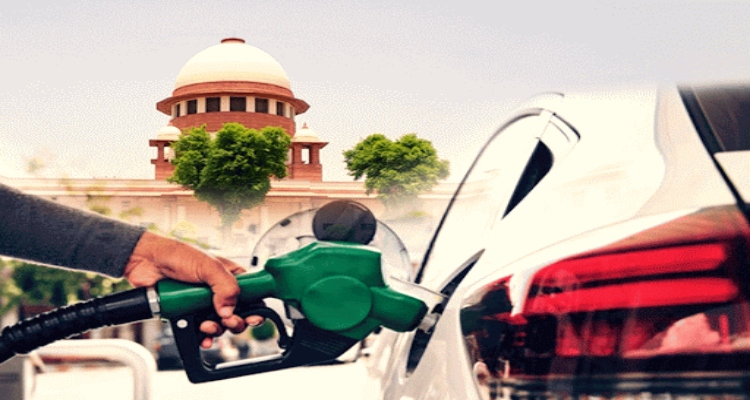
The Supreme Court on Monday refused to interfere with the nationwide rollout of 20% ethanol-blended petrol (E20), rejecting a plea that claimed motorists were being forced to use fuel incompatible with their vehicles.
A bench of Chief Justice B.R. Gavai and Justice K. Vinod Chandran dismissed the petition filed by advocate Akshay Malhotra, who had argued that the government’s push for E20 fuel left millions of vehicle owners without a safe alternative.
What The Petitioner Argued
Malhotra contended that vehicles made before 2023—and even some newer BS-VI models—are not designed for high ethanol content, exposing motorists to engine wear, efficiency loss, and safety risks. According to him, consumers were “helpless at the pumps,” with no option other than to buy E20 petrol, despite the risk of mechanical damage.
The PIL asked the court to direct the Ministry of Petroleum and Natural Gas to:
- Provide ethanol-free petrol at every station across the country.
- Clearly label ethanol content on pumps and dispensers.
- Ensure fuel attendants inform buyers about the ethanol compatibility of their vehicles before dispensing.
- Commission a nationwide study on the long-term impact of 20% ethanol blends on non-compliant vehicles.
Centre’s Defence
The Union government opposed the challenge, asserting that the blending programme is a strategic policy measure. Officials told the bench that the initiative supports sugarcane farmers, cuts down fossil fuel imports, and is a crucial step toward cleaner, renewable energy use.
The Centre stressed that manufacturers have already been advised to align vehicle technology with blending targets, and that the concerns raised in the petition were not grounds to stall the policy.
Read More: Supreme Court, Delhi High Court, States High Court, International