



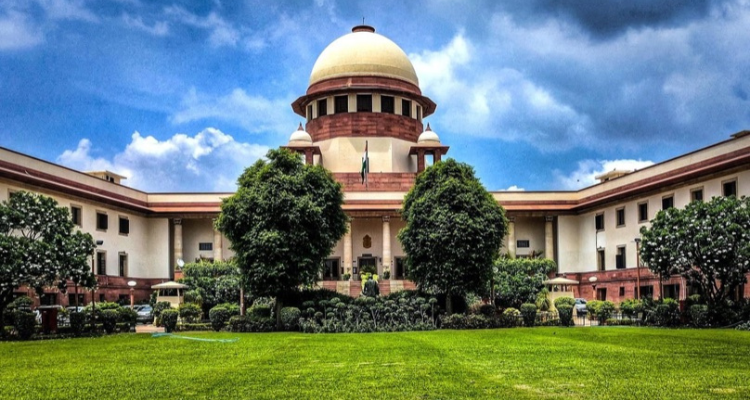
In a significant ruling, the Supreme Court on Monday held that secretly recorded conversations between spouses can be used as evidence in matrimonial disputes.
The bench, comprising Justices B.V. Nagarathna and Satish Chandra Sharma, stated that such recordings are admissible and reflect the breakdown of trust in a marriage.
The judgment came while setting aside a Punjab and Haryana High Court ruling that had barred the use of such recordings under Section 122 of the Indian Evidence Act.
Court’s View Rejected
The Punjab and Haryana High Court had earlier ruled that private conversations between spouses fall under the protection of Section 122, which states:
“No person who is or has been married, shall be compelled to disclose any communication made to him during marriage by any person to whom he is or has been married.”
Based on this, the High Court declared that secretly recorded phone calls between spouses could not be admitted in judicial proceedings, calling it a breach of privacy.
However, the Supreme Court disagreed and restored the original order of the Family Court.
Context
The case originated from a Family Court in Bathinda, where a husband was allowed to present a compact disc containing phone call recordings with his wife. He claimed the recordings supported his allegation of cruelty in the marriage.
The wife challenged the admissibility of this evidence in the High Court, arguing that it was recorded without her knowledge or consent and violated her fundamental right to privacy. The High Court sided with her and disallowed the evidence.
But the Supreme Court overruled that decision, stating that the recordings can be judicially considered by the Family Court.
Snooping Indicates Marital Breakdown
Justice Nagarathna addressed concerns that such evidence could promote spying in marriages:
“Some arguments have been made that permitting such evidence would jeopardise domestic harmony… We don’t think such an argument is tenable. If the marriage has reached a stage where spouses are actively snooping on each other, that is in itself a symptom of a broken relationship and denotes a lack of trust between them.”
The bench made it clear that when trust deteriorates to the point of covert surveillance, it becomes part of the marital reality, which courts must acknowledge during legal proceedings.
Next Steps
The Supreme Court directed the Family Court to resume proceedings in the case and to consider the recorded conversations as part of the evidence. A detailed judgment is expected to follow.
This ruling is expected to have far-reaching implications in matrimonial cases, where electronic evidence often becomes a critical part of contested divorce and cruelty claims.
Read More: Supreme Court, Delhi High Court, States High Court, International