


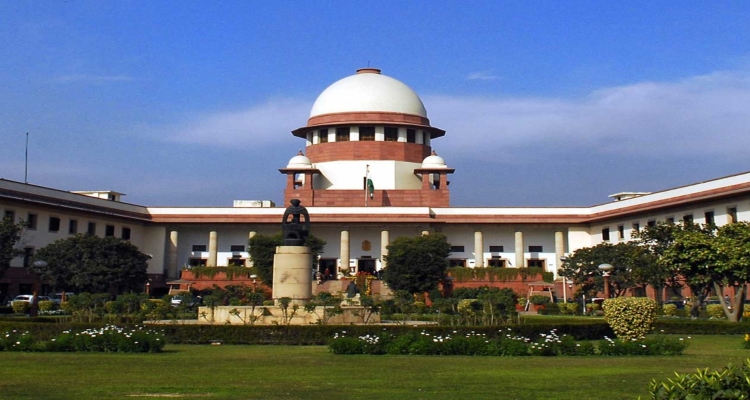
In a potentially landmark case, the Supreme Court of India on Thursday agreed to examine whether a Muslim individual can opt for the country’s secular succession laws instead of being governed by Islamic Shariat, without renouncing their faith.
Plea From Kerala Resident Sparks National Interest
The bench, led by Chief Justice Sanjiv Khanna and Justice Sanjay Kumar, took up a petition filed by Naushad K K, a resident of Thrissur district in Kerala. Naushad has approached the court seeking the right to manage ancestral property matters under India’s civil succession law, rather than Islamic personal law, all while continuing to practice Islam.
Rather than asking for any religious exemption or change of faith, Naushad’s plea emphasizes a legal choice. The court, taking the issue seriously, issued notices to both the central government and the Kerala state government, directing them to respond to his petition. The bench also decided to tag his case with two similar petitions already pending before the apex court.
Not The First Petition Of Its Kind
This case adds to an ongoing debate that has reached the judiciary before. In April last year, the Supreme Court had agreed to hear the plea of Safiya P M, a woman from Alappuzha district in Kerala and general secretary of the group ‘Ex-Muslims of Kerala’.
Safiya identifies as a non-believer, yet legally remains a Muslim. Her petition clearly stated that she wanted to handle her ancestral property as per India’s secular succession law, and not under Shariat. “She is a non-believer Muslim woman and wanted to deal with her ancestral properties under the succession laws instead of Shariat,” the court noted at the time.
Adding further weight to the matter is a 2016 petition filed by the ‘Quran Sunnat Society’, which also remains undecided. All three petitions will now be heard together, indicating the court’s intent to address the broader constitutional question.
Question Of Rights, Not Religion
At the core of the issue is whether Indian citizens who identify as Muslim can make a personal legal choice in matters of inheritance without having to give up their religious identity. The outcome of these cases could have significant implications for the debate around the Uniform Civil Code and personal liberty in India.
With the Supreme Court set to hear these matters collectively, the country awaits clarity on whether faith must dictate inheritance, or if individual choice can find room within the legal system.
Read More: Supreme Court, Delhi High Court, States High Court, International