


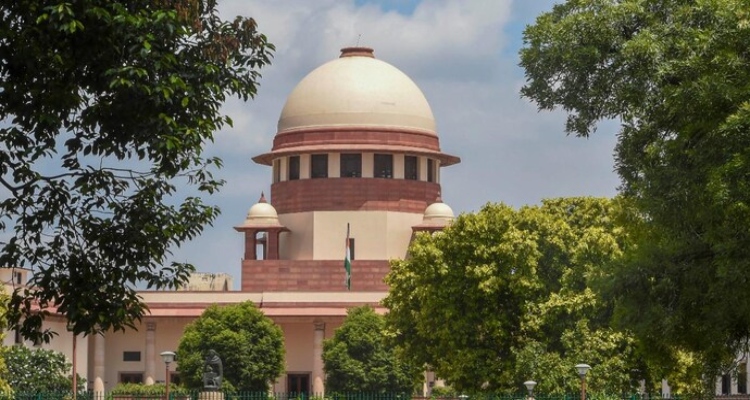
The Supreme Court on Thursday said it would hear arguments on May 20 to decide whether interim relief is warranted in the petitions challenging the constitutional validity of the Waqf (Amendment) Act, 2025.
However, the Court made it clear that it will not consider any plea seeking a stay on the provisions of the earlier Waqf Act, 1995.
Focus On 3 Key Issues
A bench led by Chief Justice of India D.Y. Chandrachud will examine whether an interim order is necessary on three specific aspects of the 2025 amendment:
The concept of waqf by user (i.e., properties recognized as waqf through long-standing public use),
The nomination of non-Muslims to the Central Waqf Council and state Waqf Boards,
The identification and classification of government land as waqf property.
Previously, the case was being heard by then-Chief Justice Sanjiv Khanna, who retired on May 13.
Controversial Provisions Spark Legal Battle
The Waqf (Amendment) Act, which came into force on April 5, has been under intense scrutiny. Several petitioners have raised constitutional concerns over provisions such as the inclusion of non-Muslims in waqf bodies and the formal recognition of waqf by user. These aspects, they argue, may affect the religious autonomy of waqf institutions and enable unwarranted claims over public or private land.
Court Earlier Secured Government Assurance
On April 17, the Supreme Court recorded an assurance from the Union government that no waqf properties—including those under the waqf by user category—would be denotified, and that no appointments to the Waqf Boards or Councils would be made until May 5.
The Centre had urged the Court not to pass any interim orders without hearing its side, pointing out that the Act had been passed by Parliament after “due deliberations.”
Government’s Firm Defence
On April 25, the Ministry of Minority Affairs submitted a 1,332-page affidavit defending the amendments and opposing calls for a stay. The affidavit dismissed the petitions as baseless and accused petitioners of promoting a “mischievous false narrative.”
In response to concerns about the inclusion of non-Muslims in waqf institutions, the government argued that such provisions do not dilute Muslim representation. Regarding waqf by user, it warned the Court against creating a “legislative regime by judicial order.”
Interestingly, the government also pointed to a 116% increase in the number of waqf properties recorded since 2013, calling it “shocking” and implying that there may have been irregularities in the way properties were added to waqf records.
As the top court prepares to hear the matter on May 20, the focus will be on whether interim relief is justified while the constitutional challenge to the 2025 amendment is underway. The case raises important questions about the balance between legislative power, judicial oversight, and minority rights.
Read More: Supreme Court, Delhi High Court, States High Court, International