


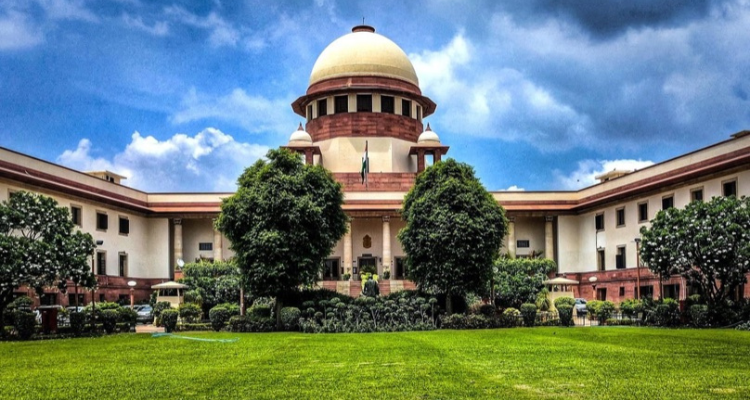
The Supreme Court on Tuesday dismissed a petition seeking directions to prevent the misuse of freedom fighter Vinayak Damodar Savarkar’s name and to include it under the Emblems and Names (Prevention of Improper Use) Act, 1950.
The plea was filed by Dr. Pankaj Phadnis, who also sought punitive community service for Leader of Opposition Rahul Gandhi over alleged derogatory remarks about Savarkar.
“No Violation of Fundamental Rights”: CJI
A bench comprising Chief Justice of India BR Gavai and Justice Augustine George Masih rejected the plea, stating that it did not establish a violation of any fundamental rights. “What is the violation of your fundamental right?” the CJI asked, pointing out that Article 32 petitions are maintainable only in cases involving infringement of fundamental rights.
Phadnis, appearing in person, argued that Rahul Gandhi’s remarks violated Article 51A of the Constitution, which deals with fundamental duties. He claimed that as a citizen, his own fundamental duty to preserve the legacy of national figures was being impeded. However, the court was not convinced. “An Article 32 petition can be entertained only for the violation of fundamental rights,” CJI Gavai reiterated.
Petitioner’s Demands
The petition claimed that Rahul Gandhi has a “habit of making irresponsible, immature and defamatory comments” about Savarkar. As an alternative to penal punishment for such remarks, Phadnis proposed that Gandhi be asked to perform community service, specifically, sweeping the floors of the Savarkar Museum in Mumbai for a day.
The court made no observations on this suggestion and simply dismissed the petition in its entirety.
Inclusion Of Savarkar’s Name in Protection Act
Phadnis also requested that Savarkar’s name be included in the schedule of the Emblems and Names (Prevention of Improper Use) Act, 1950. Under this Act, once a name is listed, it cannot be used in a manner that goes against the conditions prescribed by the Central Government. The petitioner argued that this step was necessary to preserve Savarkar’s legacy from misuse and misrepresentation.
During the hearing, Phadnis informed the bench that he had been conducting research on Savarkar for several years and was aiming to establish legally verifiable facts to protect his reputation. However, the court found no legal basis to intervene based on the arguments presented.
Verdict
In conclusion, the Supreme Court found the plea to be outside the purview of Article 32 and did not entertain any of the reliefs sought by the petitioner. The matter now stands closed with no further directions issued.
Read More: Supreme Court, Delhi High Court, States High Court, International