


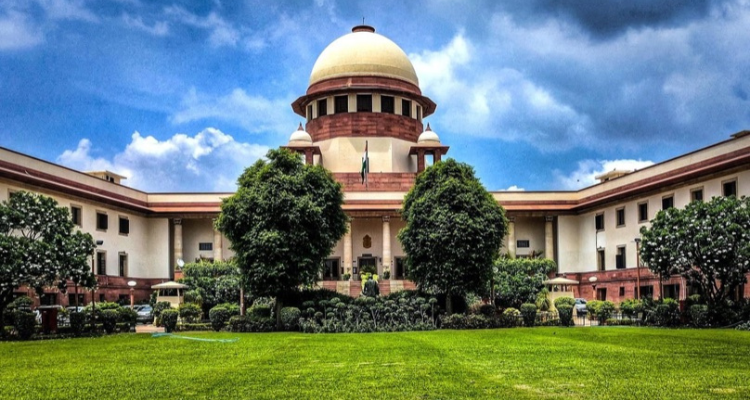
The Supreme Court has made it clear that no State Bar Council or the Bar Council of India can demand any fee beyond the statutory enrolment charge from law graduates — not even under the label of “optional.”
The court has specifically ordered the Karnataka State Bar Council to halt such collections immediately.
Contempt Plea Over Non-Compliance
The directive came from a bench of Justices J.B. Pardiwala and R. Mahadevan while hearing a contempt petition filed by K.L.J.A. Kiran Babu. The petitioner alleged that the court’s July 2024 ruling against exorbitant enrolment fees was still not being properly implemented, particularly in Karnataka.
According to the BCI’s affidavit, the Karnataka State Bar Council collects ₹6,800 for services like ID cards, certificates, welfare funds, and training, plus ₹25,000 in addition to the statutory fee — amounts it claimed were “optional.” The BCI also maintained that all state bar councils were following the top court’s directions.
The bench rejected this justification.
“We make it clear that there is nothing like optional. No State Bar Council(s) or Bar Council of India shall collect any fees of any amount as optional. They shall strictly collect fees in accordance with the directions issued by this court in the main judgment,” the order stated.
The judges added that even non-mandatory collections in Karnataka must stop.
BCI’s Compliance Measures
BCI chairman and senior advocate Manan Kumar Mishra told the court that following the July 2024 verdict, the council wrote to all state bar councils on August 6, instructing them to conduct enrolments strictly as per the ruling. The BCI also presented a state-wise chart of current enrolment fees, insisting that councils were adhering to the law.
Court’s Earlier Ruling On Fees
In its July 30, 2024 judgment, the Supreme Court ruled that steep enrolment fees — sometimes between ₹15,000 and over ₹40,000 — violated constitutional guarantees of equality and the right to practice a profession. It held that under the Advocates Act, 1961, state bar councils may only charge ₹750 for general category candidates and ₹125 for Scheduled Caste or Scheduled Tribe candidates.
The court said inflated charges perpetuate inequality, especially for graduates from marginalised and economically weaker backgrounds, and limit their entry into the legal profession. It also clarified that its decision would apply prospectively, so past excess collections would not be refunded.
Read More: Supreme Court, Delhi High Court, States High Court, International