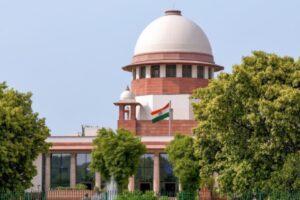


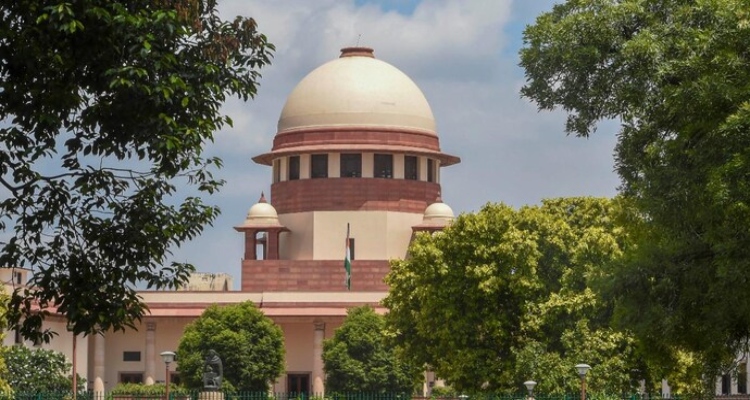
The Supreme Court on Wednesday decided to hear in July arguments over an order of the anti-corruption ombudsman, Lokpal, to examine complaints against sitting high court judges.
Court’s Observation
A special bench comprising Justices B.R. Gavai, Surya Kant, and Abhay S. Oka announced the decision on Wednesday, indicating that the matter would be referred to another bench. Justice Oka emphasized that the issue pertains to judicial propriety and should be decided by the Chief Justice of India.
The case stems from a suo motu proceeding initiated by the Supreme Court following a January 27 order from the Lokpal. In that order, the Lokpal directed that two complaints against a sitting additional high court judge be forwarded to the Chief Justice of India for consideration. The complaints allege that the judge attempted to influence an additional district judge and another high court judge to favor a private company in a legal dispute.
On February 20, the Supreme Court stayed the Lokpal’s order, expressing concerns over potential implications for judicial independence. The court issued notices to the central government, the Lokpal registrar, and the complainant, seeking their responses. During a subsequent hearing on March 18, the court appointed senior advocate Ranjit Kumar as amicus curiae to assist in examining the Lokpal’s jurisdiction over sitting high court judges.
Central Government
The central government, represented by Solicitor General Tushar Mehta, has argued that the Lokpal and Lokayuktas Act, 2013, does not extend to sitting high court judges. Conversely, the Lokpal, led by former Supreme Court judge Justice A.M. Khanwilkar, contends that high court judges fall within the scope of “any person” under Section 14(1)(f) of the Act, thereby granting the Lokpal authority to examine such complaints.
The upcoming hearing in July is expected to provide clarity on the extent of the Lokpal’s jurisdiction and its implications for the accountability of the higher judiciary.
Read More: Supreme Court, Delhi High Court, States High Court, International