



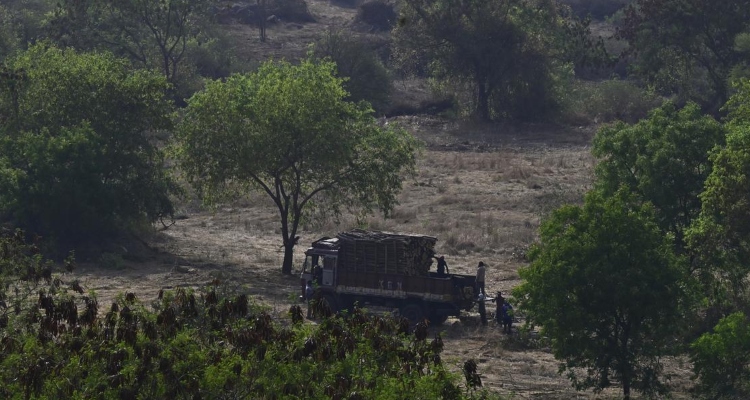
The Supreme Court on Wednesday came down heavily on the Telangana government for the large-scale destruction of forest land in the Kancha Gachibowli area of Hyderabad.
While hearing a suo motu case, the apex court criticised the state’s actions, emphasizing that sustainable development does not mean destroying forests overnight with bulldozers.
CJI Gavai: “I Am an Advocate of Sustainable Development, But…”
A bench led by Chief Justice of India (CJI) BR Gavai, along with Justices Vinod Chandran and Joymalya Bagchi, expressed deep concern over the rapid deforestation in the region. The CJI remarked, “I am an advocate of sustainable development, but that does not mean employ 30 bulldozers overnight and destroy all forest land.”
The court’s comments came as it heard the case triggered by large-scale tree felling in Kancha Gachibowli, a forest area situated within Hyderabad’s IT hub.
Court Warns Of Stern Action, Halts All Activity
In previous hearings, the apex court had warned Telangana authorities of “stern consequences” if efforts were not made to restore the forest. It directed the state’s wildlife warden to take immediate steps to protect wildlife in the affected 100-acre area. The court issued clear orders that not a single additional tree should be felled and stayed all activities at the site except for protection of existing vegetation.
Further, the court even went so far as to warn that state officials responsible for the deforestation could face time in a “temporary prison” set up at the very location if the destruction continued or was justified.
Protests & Public Backlash
The deforestation has sparked strong public backlash, particularly from environmental groups and students of the University of Hyderabad. Many have been protesting against the state’s decision to auction the land, demanding that it be transferred to the university instead. The area is not only a green buffer in a rapidly urbanising zone but also a crucial habitat for local wildlife.
SC’s Clear Stand
By taking suo motu cognisance of the issue, the Supreme Court has sent a strong message that environmental violations will not be tolerated. The bench made it clear that the concept of sustainable development must be balanced—not used as a license for indiscriminate destruction.
The case is likely to set a precedent for how green spaces within urban limits are protected amid growing pressure from infrastructure and commercial development. All eyes will now be on how the Telangana government responds and whether it takes tangible steps to restore and preserve the lost forest cover.
Read More: Supreme Court, Delhi High Court, States High Court, International