


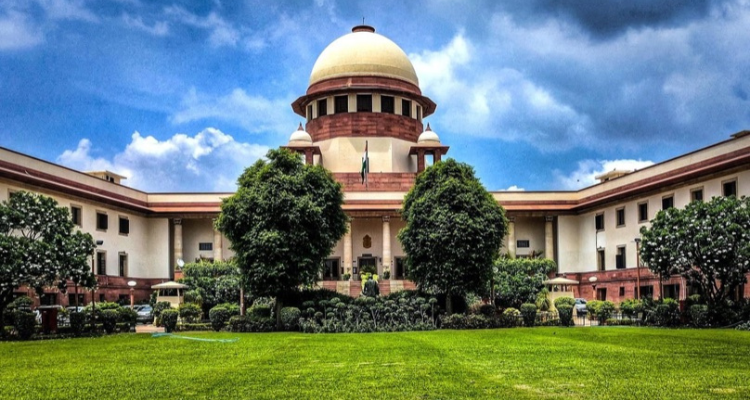
The Supreme Court on Tuesday asked what objection could arise if the President herself sought clarity through a presidential reference on whether fixed timelines can be imposed on governors and the president while acting on bills passed by state legislatures.
A 5-judge Constitution bench led by Chief Justice B R Gavai, and comprising Justices Surya Kant, Vikram Nath, P S Narasimha, and A S Chandurkar, began hearing the matter.
“When the hon’ble President herself is seeking reference then what is the problem… Are you really serious about contesting this?” the bench asked, noting that it was functioning in an “advisory jurisdiction.”
The court clarified that it would first consider preliminary objections to the maintainability of the reference before examining its merits.
President Seeks Clarification Under Article 143
In May, President Droupadi Murmu invoked her powers under Article 143(1) to ask the top court whether judicially imposed timelines could guide the discretion of the President and governors in handling state bills.
The move followed the Court’s April 8 ruling in the Tamil Nadu case, which, for the first time, required the President to decide on bills reserved for her consideration within three months.
In her five-page reference, President Murmu posed 14 questions on the interpretation of Articles 200 and 201, which deal with the powers of governors and the President over state legislation.
Centre Warns Against “Constitutional Disorder”
The Union government, in its written submission, cautioned that judicially fixed deadlines would upset the constitutional balance. It argued that such timelines would allow one organ of the state to assume powers not granted to it by the Constitution, resulting in “constitutional disorder.”
Attorney General R Venkataramani, appearing for the Centre, opposed pleas questioning the reference’s validity.
Tamil Nadu and Kerala Oppose Reference
Senior advocate K K Venugopal, representing Kerala, argued that the issue was already settled by several Supreme Court verdicts interpreting Article 200.
“These issues are no longer res integra (undecided). Once judgments cover the field, a fresh presidential reference cannot be entertained,” he said, adding that the government should have sought a review rather than using Article 143.
He further stressed that the President is bound by the aid and advice of the council of ministers under Article 74, leaving little scope for independent discretion. “In substance, this is not the President’s reference but the government’s,” he said.
Senior advocate Abhishek Singhvi, representing Tamil Nadu, echoed these concerns, arguing that a presidential reference cannot become “an intra-court appeal.” He warned it would amount to “a subversion of institutional integrity.”
Court Observes Wider Impact
During the hearing, Justice Narasimha remarked that an adjudicatory decision carries more weight than an advisory one, while the CJI asked counsel to cite judgments where such a reference was deemed untenable.
Earlier, on July 22, the apex court had observed that the questions raised in the reference could affect the “entire country.”
The hearing remains underway.
Read More: Supreme Court, Delhi High Court, States High Court, International