



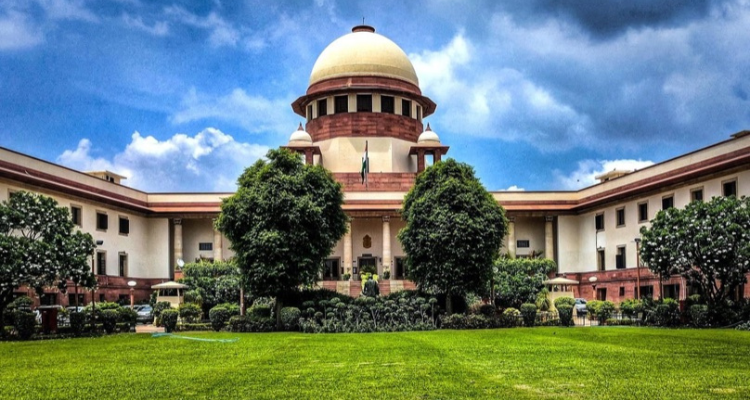
The Supreme Court on Wednesday posed a pointed question: Has India lived up to the expectations of the Constitution’s framers regarding harmony between governors and state governments?
A 5-judge Constitution Bench headed by Chief Justice BR Gavai, and comprising Justices Surya Kant, Vikram Nath, PS Narasimha, and AS Chandurkar, made the observation while hearing the Presidential Reference on the powers and timelines for governors and the president in dealing with Bills passed by state legislatures.
The remark came after Solicitor General Tushar Mehta, representing the Centre, cited the Constituent Assembly debates on the appointment and powers of governors.
Centre Defends The Office Of Governor
Responding to criticism that the office of governor often becomes a refuge for political appointees, Mehta stressed that the position is “not for political asylum seekers” but carries constitutional powers and responsibilities.
He argued that the Constituent Assembly had engaged in elaborate debates to balance the federal structure, ensuring that the governor’s role was both supervisory and consultative.
Questions On Long-Pending Bills
On Tuesday, the bench had pressed the Centre and the Attorney General on the delays in governors acting on Bills, with some pending since 2020. The judges pointed out the limitations of courts in such situations but noted the constitutional concern posed by indefinite inaction.
The top court clarified that its opinion would be confined to questions of law and would not revisit its April 8 ruling in the Tamil Nadu case, where it set timelines for governors and the president in handling Bills.
Advisory Jurisdiction Invoked
Tamil Nadu and Kerala had raised preliminary objections, questioning the maintainability of the reference. The bench, however, said it was exercising advisory jurisdiction under Article 143(1), not appellate powers.
The reference was made by President Droupadi Murmu in May, seeking clarity on whether judicial directions could bind governors or the president to act within specific timelines on state legislation.
In its written submission, the Union government cautioned that imposing mandatory deadlines would allow one organ of the state to exercise powers not granted by the Constitution, resulting in “constitutional disorder.”
Background
Earlier this year, the Supreme Court, in a significant judgment, prescribed that the President must decide within three months on any Bill referred by a governor. This was the first time such a timeline was judicially articulated.
Following this, President Murmu posed 14 questions to the Court in a five-page reference, seeking its advisory opinion on the scope of Articles 200 and 201, which govern the handling of state legislation by governors and the president.
Read More: Supreme Court, Delhi High Court, States High Court, International